Inside the heart of every man, there’s a question we don’t recognize or articulate, but we feel its weight every day. It shows up in the early mornings when the house is quiet, in the late nights when responsibility settles in, and in the moments when we wonder if we’re doing enough.
“Do I have what it takes?”
Can I provide for my family in the ways they truly need? Am I showing up for my spouse with presence instead of distraction? What does it mean to be the father my kids actually need, not just the one I imagine I should be? How do I lead with steadiness at work when everything around me feels uncertain? And is it possible to carry the weight of it all without losing myself along the way?
It’s a question that hums under the surface, not out of insecurity, but out of a deep desire to live a meaningful life.
We’re Drawn to Heroes
We see shadows of that desire in the heroes we’re drawn to. Maverick in Top Gun – protector, lover, adventurer. A man willing to risk everything for what he believes in. Or Bilbo Baggins, reluctantly pulled from the comfort of his home in The Shire, into a world demanding courage he never knew possessed. Jean Valjean choosing mercy over bitterness. Indiana Jones stepping into danger because something in him refuses to sit on the sidelines.
And the list goes on – different stories, different worlds, but the same arc.
When Ordinary Life Becomes the Call
A man starts in an ordinary life. Predictable. Familiar. Comfortable. Maybe even a little too small. Then something stirs. A call. A disruption. A sense that he’s meant for more. And when he steps toward that unknown, the journey reshapes him. He’s tested. Stretched. Torn apart. He discovers love. Faces fear. He becomes a protector. He learns what he’s made of.
By the end, he’s not a different person, he’s realized his true sense of self.
The path he’s forging doesn’t just take him somewhere. It transforms him.
The Trials That Shape a Father
And here’s what I’ve come to believe: every father is already living his own hero’s journey. Not in some cinematic, larger‑than‑life way – but in the quiet, unseen moments that actually define us. The hard conversations. The sacrifices no one notices. The days when you show up even though you’re tired, stretched thin, or unsure.
Those are the real thresholds. Those are the real battles. The real transformations.
The Journey You’re Already On
The question isn’t whether you’re on a hero’s journey. You are.
The question is whether you’re willing to see your life – your real, everyday life – as the terrain where courage is forged.
Because maybe the hero isn’t the man who saves the world.
Maybe it’s the man who chooses, again and again, to show up for the world that depends on him.
And, perhaps the question you should be asking yourself is not “Do I have what it takes?”, but “What is my next step?”
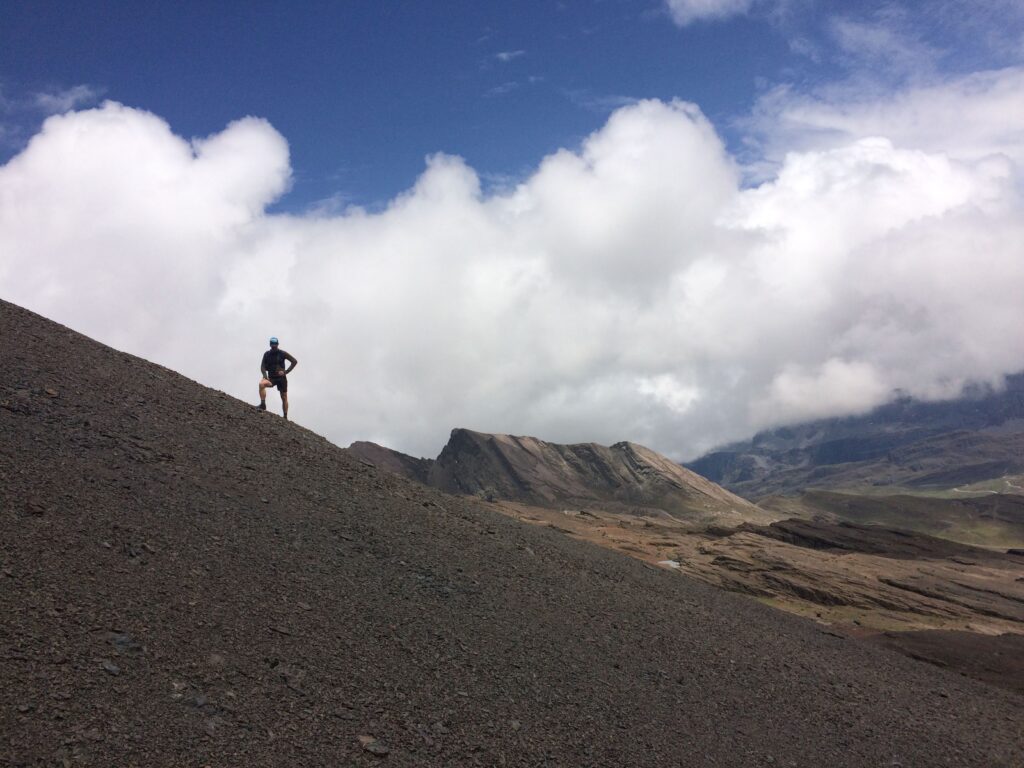
Life is hard. I have often compared it to climbing a mountain. Generally, climbing a mountain includes early mornings, think 3:30 a.m., strain on your legs as you climb steep terrain, burning lungs from lack of oxygen up high, strong winds on the summit ridge, repressed appetite, and a host of other challenges the mountain will throw at you. It’s easy to question your sanity during all the suffering, wondering why anyone would sign up for something like this.
But when you stop to look around, you’re often in one of the most beautiful places on earth. The sunrises are always majestic. The sky a deeper blue. And the feeling of reaching the summit? Indescribable.
Most people think of joy the same way, as a destination, a summit if you will, that you achieve once life finally lines up the way you want. But the research tells a different story.
Joy isn’t a finish line. It’s a compass.
It doesn’t tell you where you are. It tells you where you’re aligned. And, it points toward what matters, what’s true, and what’s truly you.
Across psychology, neuroscience, and human development, joy consistently shows up as a directional signal – a subtle but powerful indicator that you’re moving in harmony with your values, identity, and purpose.
And just like on a mountain, when the weather turns or the trail disappears, a compass becomes your most trustworthy guide.
In this article, we’ll explore five evidence‑based practices to cultivate joy, each one intended to help you read your internal compass with more clarity and confidence as you navigate the climb you call life.
What Joy Really Is (and Why It’s Different From Happiness)
Researchers make a clear distinction:
Happiness is a broad evaluation of life satisfaction.
Joy is a moment‑to‑moment emotional experience tied to meaning and authenticity.
Joy is what you feel when your internal compass clicks into alignment. It’s the sensation of rightness – even in imperfect circumstances.
This matters because it means joy is accessible even in seasons of stress, uncertainty, or change. Like a climber on a mountain, you don’t need perfect conditions. You just need alignment.
5 Evidence‑Based Ways to Use Joy as a Compass in Your Life
Below are five research‑supported practices that help you read, trust, and follow your internal compass.
1. Reconnect With Your Core Values (Calibrate the Compass)
Your compass only works when it’s calibrated. In human terms, calibration = values.
Research shows that joy emerges when your actions align with what you value most. Values are the magnetic north of your emotional landscape. When you drift from them, the compass spins. When you return to them, joy points the way.
On a mountain, this is the moment you stop, pull out your compass, and realize you’ve been veering off the ridge. One small adjustment changes everything.
Try this: Think of a moment when you felt genuine joy. What value was being honored? Was it connection, creativity, adventure, service, beauty?
Joy is the needle. Values are the north.
2. Let Hardship Reset Your Bearings (Difficulty Clarifies Direction)
One of the most powerful findings in joy research is this: Joy and suffering are not opposites.
Hardship often resets the compass. It strips away the noise. It reveals what truly matters.
On a climb, this is the moment when the wind picks up, the trail disappears, or fatigue hits hard, and suddenly you’re forced to reassess. Difficulty clarifies direction. It reminds you why you started. It sharpens your focus.
Researchers describe this as a paradox: difficulty deepens meaning, and meaning creates the conditions for joy.
Try this: When life feels heavy, ask: “What is this moment showing me about what matters most?”
Pain doesn’t break the compass. It often makes it more accurate.
3. Seek Joy in Relationships (Climb With Others Who Help You Navigate)
Most joy is relational. Studies show that joy is amplified when shared – in families, friendships, teams, and communities.
Think of relationships as the fellow travelers who help you read the map. They reflect back what you can’t always see. And, they help you stay oriented when the terrain gets rough.
Every climber knows the power of a good rope team, people who pace you, encourage you, and keep you safe. Joy works the same way. It grows in connection.
Try this: Create one small, recurring ritual of shared joy – a weekly walk, a family breakfast, a gratitude moment with your team.
Joy becomes clearer when you’re not navigating alone.
4. Practice Presence and Savoring (Slow Down Enough to Read the Compass)
A compass is useless if you’re sprinting past it. Joy works the same way.
Mindfulness, savoring, awe, and gratitude all help you slow down enough to notice the subtle pull of joy. It is the quiet “this way” that’s easy to miss in a rushed life.
On a mountain, this is the moment you pause to catch your breath and suddenly notice the alpenglow on the peaks, the crunch of snow under your boots, the silence that feels like a blessing. The mountain didn’t change, but your awareness did.
Try this: Pause once a day and ask: “What is good here, right now, that I might have missed?”
Presence doesn’t create joy. It reveals it.
5. Create Environments Where Authenticity Is Safe (Clear the Interference)
A compass can’t function near strong interference. Neither can joy.
In workplaces, families, and communities, joy emerges where people feel safe to be themselves – unguarded, unperformed, unpolished.
Authenticity clears the static. It lets the needle settle.
On a climb, this is the difference between hiking with people who pressure you to pretend you’re fine and hiking with people who let you be human – tired, exhilarated, scared, strong. Joy thrives in that kind of honesty.
Try this: Ask yourself: “Where in my life do I feel most like myself?” Then ask: “How can I create more spaces like that — for myself and for others?”
Joy thrives where people can show up whole.
Conclusion: Follow the Compass, Not the Map
Maps are rigid. Compasses are alive.
Joy doesn’t give you a step‑by‑step plan. It gives you orientation and a direction that’s deeply personal, deeply meaningful, and deeply human.
The research is clear: joy is not something you wait for. It’s something you follow.
Just like climbing a mountain, the path will twist, the weather will change, and the terrain will challenge you. But if you keep checking your compass – your values, your relationships, your presence, your authenticity, you’ll keep moving toward what matters, one step at a time.
Your compass is already inside you. Your work is simply to learn how to read it, and to trust where it points.
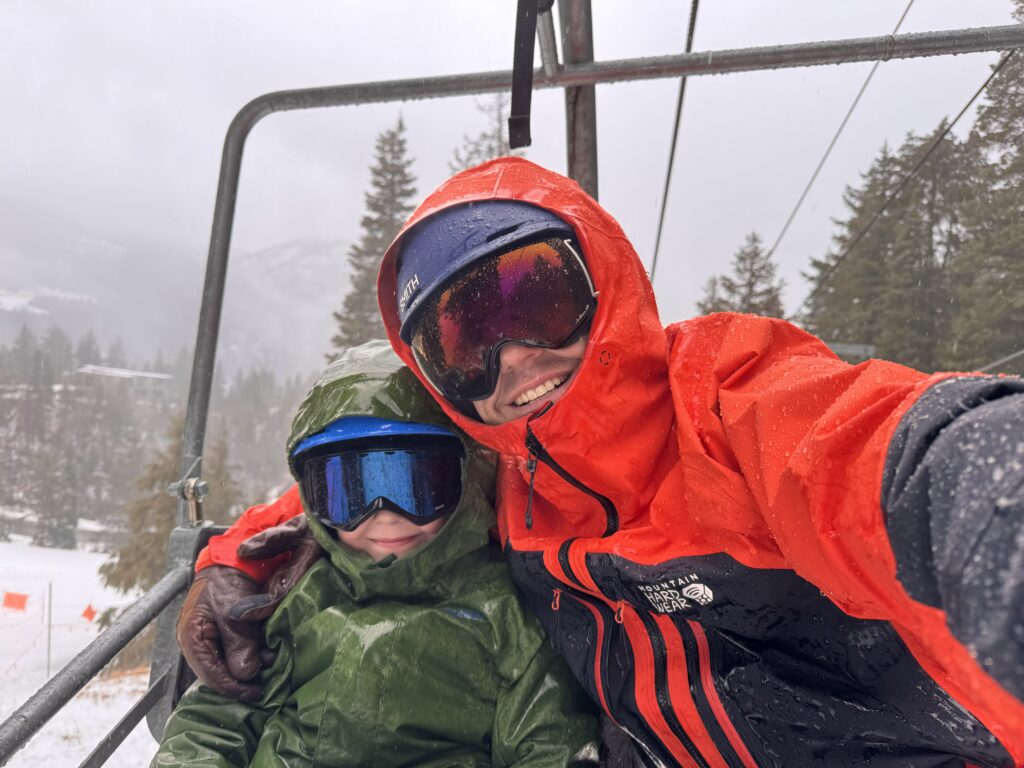
Our family weekends in the winter start with the sound of ski boots clicking into place and cold air filling our lungs.
We have intentionally chosen skiing – not because skiing is easier (it’s not). Not because it’s cheaper (definitely not). But because we wanted our weekends together, not spent in different cities, but side‑by‑side on the same lift, breathing the same cold air, actually talking to each other.
On the mountain, each of us gets to grow without growing apart. One kid drops into a black run. Another sticks to the blues. We meet at the lift with cold faces and big smiles ready for another lap.
No trophies. No rankings. Just time together.
Those hours on the mountain have strengthened our family more than any medal ceremony ever could. They’ve reminded me that growth doesn’t have to pull us in different directions; it can bring us closer if we choose it intentionally.
And that realization has shaped the work I’m doing now.
I’m building a community for fathers who want to be more present with their teens. It’s for dads who are tired of living on autopilot and ready to create a life that reflects what they value most. Not perfection. Not performance. Just intentionality.
Through my work, I help fathers rethink how they spend their time, how they build connection, and how they show up for the people who matter most.
If you’re a dad looking for a different way to lead your family – one rooted in presence, not pressure – I’d love to walk that path with you.
Lately I’ve been thinking about the ideas in Zen and the Art of Motorcycle Maintenance by Robert M. Pirsig. If you haven’t read it, the book follows a father and son on a long motorcycle trip. Along the way, Pirsig reflects on Quality – what it is, where it comes from, and how it shapes a meaningful life. He suggests we recognize Quality long before we can ever hope to define it.
Take, for example, the Ferrari 250 GT Lusso. It’s not the rarest Ferrari ever built (approximately 350 were produced), nor the fastest (the new 849 Testarossa likely takes that title). But each Lusso was hand‑finished with an almost meditative level of care. Every line. Every seam. Every curve was shaped with intention. I’ve never driven one (and probably never will), but those who have, say the experience isn’t about speed or aggression. It’s about harmony. The twelve cylinders don’t roar so much as sing. It’s a car that begs to be driven well, not fast.
The Lusso reflects the quiet discipline of a craftsman who cared enough to do something well simply because it deserved to be done well. And in that way, it mirrors the work of a father.
Fatherhood isn’t about speed or spectacle. It’s not measured in grand gestures or perfectly engineered plans. It’s shaped in the small, intentional moments of your life – the way you listen, the way you show up, the way you steady yourself before responding. Like the Lusso, the relationship you build with your children is hand‑finished over time. Every conversation. Every boundary. Every shared laugh or late‑night worry. Each one is a line, a seam, a curve shaped with care.
A father who leads with intention creates a kind of harmony in his home. Not perfection, but presence. Not control, but connection. And over years, those moments accumulate into something unmistakable: a relationship defined by Quality – felt long before it can ever be fully explained.
That’s where the real invitation begins.
If you want to cultivate more Quality in your relationships, ask yourself: “Where in my life am I rushing past the very moments that deserve to be hand-finished?” Then choose to show up differently today. Don’t wait for tomorrow. Because in the end, the Quality of your life, and theirs, is shaped not by what you achieve, but how you choose to show up in the moments that matter most.
Have you ever felt like a ghost in a crowded room?
I have.
It’s that strange moment when you’re physically present but emotionally invisible almost as if you’re standing behind a pane of glass while everyone else mingles on the other side. You watch the laughter, the inside jokes, the easy familiarity, and you wonder if anyone will notice the quiet figure in the corner.
I’ve always been a bit jealous of the people who can glide into a group like a bird joining a flock. Others, especially us introverts, move more like deer at the edge of a clearing, cautious, hoping for a sign that it’s safe to step in.
This longing isn’t weakness. It’s wiring. Baumeister and Leary once argued that belonging is as essential as water or food. We don’t just want connection, we need it. Belonging is the emotional oxygen that keeps us alive. Somewhere along the way, our relationship with connection got tangled up with our relationship to technology.
Back in my English undergrad days, we studied thinkers like Fish, Pirsig, Derrida, and Foucault, people who loved to peel back the layers of meaning in everyday life. During one of our debates, we found ourselves discussing the virtues and vices of technology. What struck me then, and still strikes me now, is how technology has always been a double-edged sword. It improves the human experience, yet it simultaneously creates distance.
Merriam-Webster defines technology as “a manner of accomplishing a task, especially using technical processes, methods, or knowledge.” Our ancestors discovered fire, created clothing, and built shelter. These innovations made life a little safer and more comfortable, but they also began to create subtle separations within the tribe. Comfort can sometimes come at the cost of connection.
This pattern becomes even clearer when we look at more recent history. Imagine a summer evening in the 1800s: children playing outside, neighbors gathered on front porches, conversations drifting like fireflies through the warm air. Community was not an event but a natural rhythm.
Then electricity arrived, and with it, the radio. Families moved indoors to gather around a glowing box of sound. The porch, once a social hub, grew quieter. The television deepened this shift, drawing people further inside. The personal computer, the internet, and now AI have each added new rooms to the house of modern life, but with every new room, another door quietly closed.
Today, it’s common to see a family sitting together in the same living room while inhabiting entirely separate worlds. Parents scroll through emails, a daughter navigates social media, a son battles digital opponents. They share physical space but not emotional presence. The irony is striking: we search our screens for belonging while the people we long for are often sitting just a few feet away.
This is not an argument against technology. Like fire, technology can warm or burn depending on how we use it. It is neither inherently good nor inherently harmful. It is a tool, capable of connection, creativity, and convenience; however, it’s also capable of distraction and quiet disconnection if left unchecked.
The challenge, then, is not to reject technology but to relate to it intentionally. If belonging is as essential as Baumeister and Leary suggest, then we must protect the spaces where belonging grows. We must treat technology like a campfire: something that can bring us together when used wisely, but something that can blind us to one another if we stare into it too long.
As we move into 2026, the invitation is simple: Be deliberate. Set boundaries. Look up. Notice the people in the room with you.
Belonging doesn’t happen by accident. It happens when we choose connection – again and again, on purpose.
1. Create Emotional Safety Through Warmth & Consistency
Studies show daughters with warm, supportive fathers have lower baseline stress and calmer cortisol responses during conflict. Your steadiness becomes her nervous system’s steadiness.
Try this: End each day with a moment of connection: a check‑in, a hug, a shared ritual.
2. Be Present in a Way She Can Feel
Father presence isn’t just physical. Research defines it as a psychological experience. She needs to feel seen, supported, and valued by YOU. Your presence predicts higher resilience, stronger achievement goals, and better emotional regulation.
Try this: When she talks, stop what you’re doing. Look at her. Listen fully.
3. Support Her Autonomy – Don’t Control It
Daughters who experience autonomy support from their fathers show lower stress reactivity and greater confidence in social situations. She learns to trust herself because you trust her.
Try this: Ask more questions than you give answers. “What do you think?” “How would you handle it?”
4. Model Calm in Conflict
Research shows daughters with chaotic or coercive father relationships have higher cortisol spikes during peer conflict and are more likely to ruminate. Your emotional regulation becomes her template.
Try this: When tension rises, slow your breathing and speak softly. You’re teaching her how to navigate hard conversations.
5. Build Her Psychological Security
In a study of 718 girls, psychological security explained nearly 40% of their resilience. Furthermore, father presence was one of the strongest predictors of that security. When she feels safe with you, she becomes safer within herself.
Try this: Affirm her effort, her courage, her character, not just her achievements.
I love this time of year – the lights, the comfort food, the focus on serving others, the gift giving, ski season. If we allow it, this time of year helps us reset, prioritize, and reflect on what truly matters. I read the following article last week just before my family and I went to the mall to experience holiday shopping.
As we were walking around, looking at all the “stuff”, I couldn’t help but think about what Christmas would have been like 100 years ago. What were the top gifts that everyone had to have? What were the biggest designer trends? It was the height of the Roaring ‘20s, with the Great Depression still a few years away. World War I had recently ended.
Now, think about life 100 years from now. What trends will define that era? Which gifts will capture attention? What political and economic landscapes will shape daily life? It’s anybody’s guess. My point is the gifts that feel so exciting now won’t matter in 6 months. In fact, the dopamine rush we get from unwrapping presents often fades the moment the last ribbon is pulled. We’ll then be left wondering why we focused so much on all this stuff.
This year, let’s focus on giving our most valuable gift possible – the gift of time. Give your family a meaningful experience, something impactful throughout the year. Not just on Christmas Day. When I was a graduate student at BYU, I worked with Ramon Zabriskie (he’s an amazing fly fisherman, by the way). He and Bryan McCormick developed the Family Leisure Functioning Model.
Their model suggests family leisure isn’t just about fun, it is foundational to strong relationships and healthy family functioning. They determined that families need both core and balance leisure activities. Core leisure activities are routine, low‑cost, and accessible (e.g., family meals, walks, board games). These activities provide stability and foster family cohesion. On the other hand, balance leisure activities are less frequent, novel, and often more complex (e.g., vacations, special outings) and provide variety to help families develop adaptability.
As we step into this season, let’s give the gifts that matter most – shared meals, laughter on snowy trails, adventures that stretch us, and quiet rituals that anchor us. When we choose to give our time and presence, we invest in the kind of legacy that endures far beyond trends or toys. This Christmas, may we trade the fleeting thrill of “stuff” for experiences that strengthen our families. These deepen our connections and remind us what really matters.
Remember Twinkies? Those cream filled vanilla cakes that seem to last forever? I used to say that Twinkies and cockroaches would be the only thing to last through a nuclear attack. Sure, they were a delicious snack for some of us and after eating a few of them may fill our belly. However, they are so heavily processed there’s very little nutritional value – basically, empty calories. If we were to only eat Twinkies for the next week, our bodies would be starved for critical nutrients. And if we ate them for a longer period, I’m sure we would transform into a well-preserved, atomic proof human – on second thought, maybe I should eat them more often.
All joking aside, how often are we as men filling our time with things that don’t matter? It is so easy to live day-to-day, self-medicating through our metaphorical Twinkies. These include the dead scroll on social media, binge-watching our favorite shows, working too much, and losing sight of what’s important. The challenges of life often drive us to look for quick and easy hits of dopamine. These help us feel better about our situation, when in reality, that’s the last thing we need.
Instead, we should turn to bettering ourselves and building something that will last. What is the legacy you want to leave behind? Sure, it will take some effort, but anything worth doing in life will require some sacrifice on your end. You only have one life. This is your shot. How are you living? Are you just going through the motions, or are you living intentionally? Sure, it’s ok to relax and take a few minutes to watch your favorite show, or scroll through social media. But are you intentional about it?
Here’s the truth: Twinkies may last forever, but your time won’t. Each day is a chance to choose growth over distraction, connection over isolation, and purpose over passivity. The legacy you leave will be shaped not by the empty calories of convenience, but by the intentional steps you take toward meaning.
On the northern bank of the Colorado River near my hometown of Moab, Utah, there used to be a massive tailings pile. In the 1950s, 60s, and 70s, long before tourism transformed the town, Moab was a mining community. Its main product – uranium. The mining company would extract the valuable mineral from the earth, then discard the remaining refuse into a growing mound. Over time, this became known simply as the tailings pile.
In recent years, the pile has been removed, but the land still bears the scars of extraction – a wide, open space where something precious was taken and the remnants left behind. To truly heal, we must live with intention, focusing on personal restoration.
This post isn’t about the virtues or vices of mining. It’s about us – about society, and the way life shapes us.
When we’re born, we arrive with a unique set of gifts and talents. As we grow, experiences help us develop those gifts, but we also encounter voices telling us we’re not good enough, our talents are inconvenient, or that they don’t matter. Over time, we learn to sort our gifts into categories: the ones that are celebrated, and the ones that are dismissed.
When we reach our 30s, 40s, or 50s, many of us begin to realize that some of our most valuable resources – our gifts, our passions, our talents – have been extracted. To counteract this, we must intentionally reclaim our strengths. The daily grind, the expectations of others, and the weight of responsibility slowly degrade us. What remains is a shell of what we once were, like a pile of used dirt. We look at ourselves and wonder: What happened to the person I used to be? Why am I not the husband, father, provider, or leader I thought I would become?
The life we’ve been told to live often leaves us empty, desperate, anxious, and depressed.
But here’s the truth: the scars don’t have to be the end of the story.
The land by the Colorado River will heal, and so can we. Our scars are not signs of defeat, but reminders that we are still here, still capable of growth, still able to leave a legacy. Imagine the impact if every father reclaimed his gifts, lived with intention, and passed that strength on to his children. The future is not written in the scars of extraction – it is written in the courage to rebuild. Let’s rise, together, and live the life we were designed to live.