Category: Intentional Living

Essays on living deliberately instead of by default — purpose, identity, attention, and the quiet choices that decide what a life adds up to.

  • THE SONG I DON’T PICK

    Or, why I haven’t taken a singing lesson in thirty years.
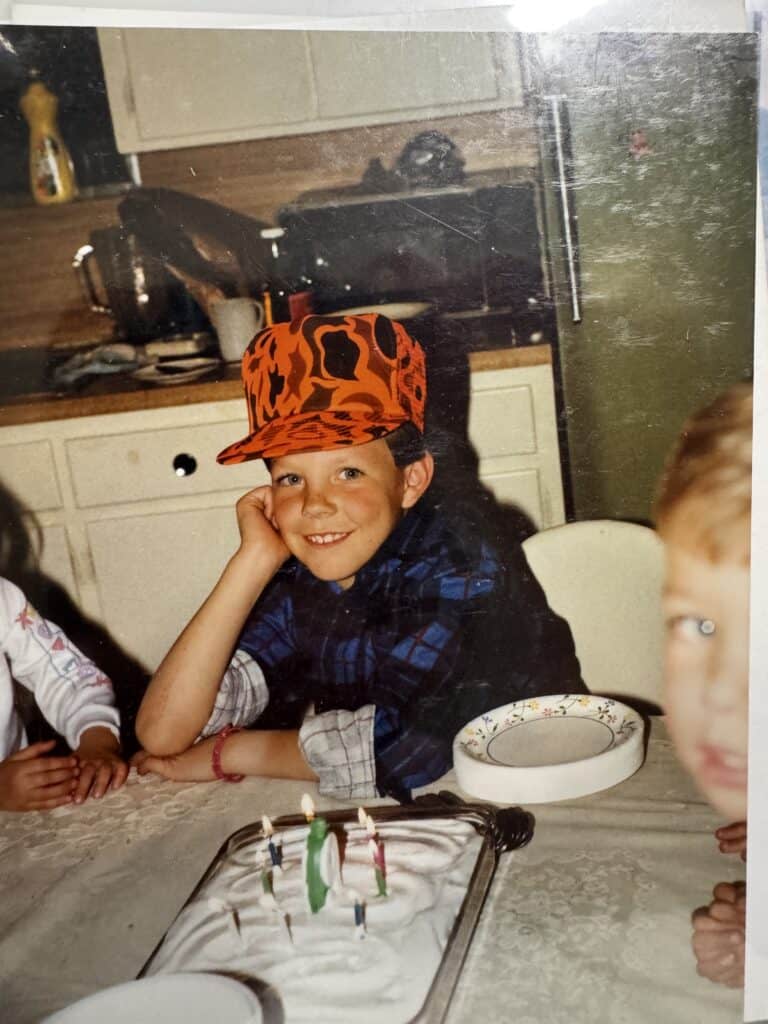
    The author as a boy in his grandmother's kitchen celebrating his birthday, wearing an orange camo cap and blue plaid shirt behind a candlelit cake.

    Last week after our kids were in bed, my wife and I were in the kitchen and I told her, again, that I sometimes think about taking singing lessons. I said it, casually, the way you mention something you’re not going to do. She listened. We’ve had this conversation a few times.

    I haven’t taken the lesson. I haven’t picked the song I’d want to sing. Honestly. . . I haven’t picked any song.

    Around the Piano

    When I was a kid, I loved to sing. My mom would gather us around the piano and play, and we’d sing along. I thought every family did this. I thought it was something kids and parents simply did together.

    My grandparents made it bigger. My grandma wrote music and played the piano masterfully. And, my grandpa sang in churches across southeastern Utah, and some people said his voice rivaled that of Sinatra. I loved sitting in their living room, listening to my grandma play and my grandpa sing. Some of the most tender moments of my childhood are around that piano.

    The Audition

    In sixth grade, I tried out for the traveling choir. I thought I was a shoo-in. After all, I loved singing, and I came from a family that could sing. I didn’t make it.

    That was the end of my singing career.

    After the Audition

    A year later we moved to Moab. It was a smaller community, with more opportunities to participate in school activities. I could have tried out for everything. I didn’t. By then I had decided I wasn’t a singer. The audition had told me, and, quite frankly, I had agreed. By seventh grade I wasn’t even letting myself try.

    The verdict didn’t just stop me from singing one time. It restructured what I was willing to want.

    Thirty years of not really singing. Sure, I sing in the car. I sing at church. But, never in the choir. I never audition or let anyone listen on purpose.  More often, I make a joke about my inability to sing. My sister has more musical talent in her left pinky than I have in my whole body. I’ve said that line so many times I almost believe it.

    And Yet

    Sometimes I think about taking singing lessons. I’ve told my wife about it more than once. She knows. It comes up enough that she’s stopped being surprised by it.

    But I have never picked a song. Not even in my head. The thought lives at the level of lessons. Never at the level of a particular song, the one I would want to be able to sing.

    That’s what buried yearning looks like. You keep it abstract enough that it can’t disappoint you.

    The Reasonable Answer

    When I think about why I don’t do it, the answer comes out reasonable. I should put my energy elsewhere. There are things only I can do for the people who depend on me. There are talents I have that actually bless people. Nobody would want to hear me sing now anyway. A man my age, taking lessons for something he isn’t going to be good at, is wasting his time.

    You see how logical that sounds?

    It’s the same protective move as the audition, dressed up as maturity. The eleven-year-old learned that wanting something meaningful and not getting it hurts. And the grown man? He found a way to bury that desire. He says, “I’m only worthy of my own time if I’m using it to serve someone else.”

    The Side Effect

    My grandparents weren’t trying to bless anyone. They were doing it because they loved it. She played because she had been playing her whole life. He sang because his voice wanted to come out of him. The blessing was a side effect.

    I was a kid in that room, being blessed by people who weren’t doing it for me. They were doing it purely for the enjoyment. And, that joy spilled over. It can’t be manufactured. It only comes naturally.

    Honestly, I still don’t know what I’m going to do with this thought. I’m not telling you I scheduled the lesson because I haven’t. I still have no clue what song I’d even sing.

    What I am saying is there’s a question I’ve been holding for thirty years, and it’s not really about singing.

    What counts as a legitimate use of your energy? Is joy allowed to count for itself? Or does it always have to bless someone first?

    Hi, I’m John!

    I’m a father, leader, outdoorsman, and the founder of PathForgeXP. I grew up in Moab, Utah, and I spend most of my time helping fathers reconnect with what matters through wilderness retreats and intentional living. I don’t have this figured out. I’m just a man on the trail, writing about what I’m learning along the way. 

    John Bishoff, founder of PathForgeXP, hiking through the red rock landscape near Moab, Utah.
  • The Stream That Never Questioned Itself

    On invisible wor, sandstone patience, and learning to trust the current.


    I’ve crossed this stream a hundred times. Maybe more. It runs through a stretch of desert I know well, close enough to home that I don’t think of it as a destination. It’s just part of the walk. Background noise. The kind of thing you step over on your way to somewhere else.

    Last week, for whatever reason, I stopped.

    I don’t know what made me look down. Maybe I was tired. Maybe I’d been carrying something heavier than usual and the weight of it slowed my pace enough to notice what had always been there. But I looked, and what I saw stopped me.

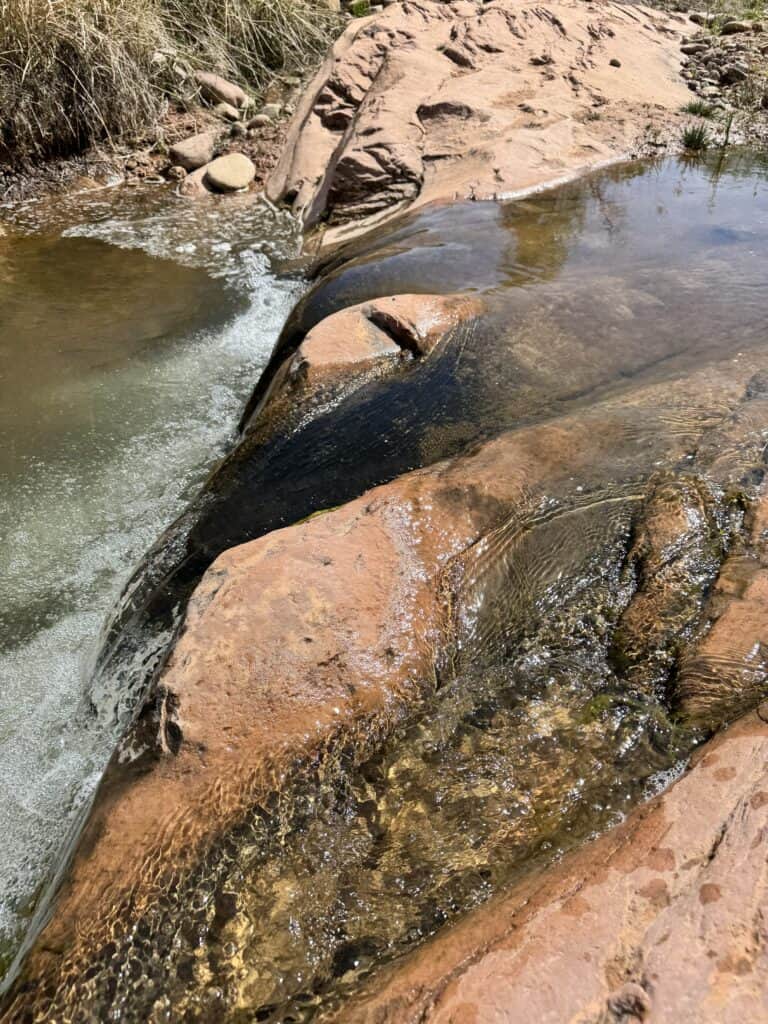
    The sandstone underneath the water was carved smooth. Inches deep. Grooves worn into rock so precisely they looked intentional, like someone had taken a chisel and traced a pattern with careful hands. The edges of the channels were rounded and polished. The surface of the stone had a texture that only comes from time and repetition, not from force.

    This wasn’t the work of a huge river. There was no dramatic current, no whitewater, no evidence of a single catastrophic flood that reshaped the landscape in one afternoon. This was a small stream. Quiet. Barely ankle-deep in most places. The kind of water most people wouldn’t even pause to photograph.

    And it had carved stone.

    The Invisible Work

    I stood there longer than I expected. Something about it wouldn’t let me go.

    I’ve been where that stream is. Not geographically. Emotionally. Professionally. In the kind of deep, interior place where you ask honest questions about whether any of it is working. Where the effort you’re pouring into something doesn’t seem to match the progress. Where you look around at other people and their visible results and wonder if you’re fooling yourself.

    There are seasons in a man’s life when the work feels invisible. You’re showing up. You’re doing the reps. You’re having the hard conversations, staying disciplined when nobody is watching, putting in hours that don’t come with applause or metrics or a quarterly review to tell you you’re on track. And the gap between effort and evidence starts to feel unbearable.

    This is the place where most of us make our worst decisions. Not because we lack skill or intelligence, but because we lose patience with the process. We start to believe the lie that if progress isn’t visible, it isn’t real.

    The stream never questioned whether it was making a difference. Never compared its groove to someone else’s canyon. Never took a week off to rethink its strategy. It just kept flowing.

    That’s what I saw in that sandstone. Not a motivational metaphor. Not a bumper sticker about persistence. I saw the actual, physical evidence of what consistency looks like when you extend the timeline far enough. And I realized I had been walking past that evidence for years.

    The Mythology of the Breakthrough

    We live in a culture that worships the breakthrough moment. The overnight success. The viral post, the big deal, the promotion that changes everything. And because we worship it, we’ve built an unspoken belief system around it: that meaningful change happens suddenly. That if you’re doing it right, you’ll feel the shift.

    But most of the important things in life don’t happen that way.

    A marriage doesn’t become strong because of one grand gesture. It becomes strong because two people kept choosing each other through ten thousand ordinary mornings. A child doesn’t trust you because you took them on one epic trip. They trust you because you were present at breakfast, consistent at bedtime, steady when things got hard, and honest when you didn’t have answers.

    The same is true in work. In health. In faith. And in any area where the results are built, not bought.

    The problem is that the quiet days don’t feel like progress. They feel like repetition. And repetition, if you’re not careful, starts to feel like futility. That’s the moment where we begin to question the current. We pull up the map and wonder if we’re on the right path. And, we compare our little stream to somebody else’s river. We start looking for a shortcut, a bigger channel, a faster route to the kind of results that would finally make the effort feel justified.

    And that’s often the moment we quit. Right about the time the rock starts to soften.

    What the Stream Knows

    Here’s what struck me as I stood over that water last week. The stream didn’t carve stone by trying harder. It didn’t find a more efficient angle or attend a conference on erosion strategy.

    It just kept showing up. Day after day. Year after year. Decade after decade. Not with force, but with faithfulness.

    There’s a difference between those two things, and I think it matters.

    Force is what we default to when we’re anxious about results. We push harder. Work longer. Add more volume, more intensity, more hustle. Force is driven by the fear that what we’re doing isn’t enough, so we compensate with effort.

    Faithfulness is something else. Faithfulness is steady. It trusts the direction without needing constant proof that it’s working. It’s willing to be small. Willing to be unnoticed. Willing to stay in the same channel when everything in the culture is telling you to chase a bigger one.

    The stream that carved the sandstone in my backyard wasn’t powerful. It was faithful. And over time, faithfulness did what force never could. It reshaped something permanent.

    The Work Nobody Sees

    I think about this constantly now. Not just in my own life, but in the lives of the men I work with.

    I talk to fathers who are doing real, unglamorous work. Men who are choosing presence over performance. Who are having awkward conversations with their teenagers instead of retreating into their phones. Who are rebuilding trust with their families one kept promise at a time, knowing that the evidence of change won’t show up for months. Maybe years.

    That work doesn’t get a standing ovation. There is no leaderboard for it. Nobody posts about the Tuesday night when you sat at the kitchen table and listened to your daughter talk about something that didn’t interest you at all, and you stayed anyway. Nobody celebrates the morning you woke up early to be present before the chaos started, not because anyone noticed, but because you decided that’s who you want to be.

    This is the invisible work. And it is the most important work there is.

    Because the people in your life don’t experience your effort as a single grand gesture. They experience it as a current. A steady, small, reliable flow of attention and care that, over time, shapes everything it touches. They might not notice it on any given Tuesday. But they will notice what it built.

    Learning to Trust the Current

    I’m learning something, and I want to be honest about the fact that I’m still in the middle of it. I haven’t arrived. I don’t have this figured out.

    I’m learning to trust the current.

    That means letting go of the need to see results on my timeline. It means staying faithful to the work even when the sandstone looks exactly the same as it did yesterday. It means resisting the urge to compare my stream to someone else’s river and concluding that I must be doing something wrong.

    And, it means paying attention. Because the evidence is often there. I was walking past it for years. The grooves in the rock were always beneath my feet. I just never slowed down enough to see them.

    That’s maybe the most important part of this. The stream didn’t need me to validate its work. It had already carved the stone. My noticing didn’t make it real. It was real the whole time. But my noticing changed something in me. It gave me a reference point for the days when the effort feels invisible and the progress feels nonexistent.

    Now, when I cross that stream, I look down. I let myself see what patience built. And I remember that the work I can’t see yet is still working.

    An Invitation

    If you’re in a season where the work feels invisible, I want to ask you something. Not as a challenge. As an honest question from someone who has stood in that exact spot.

    What’s the work you’ve been doing that nobody sees yet?

    The conversations you keep having. The discipline you keep choosing. The presence you keep offering even when it doesn’t seem to register. The promises you keep, quietly, without fanfare.

    That’s not futility. That’s a current.

    And currents, given enough time, reshape stone.

    For more information on what we do at PathForgeXP, click here.

  • The Science of Joy: 5 Research‑Backed Ways to Use Joy as a Compass for a More Meaningful Life

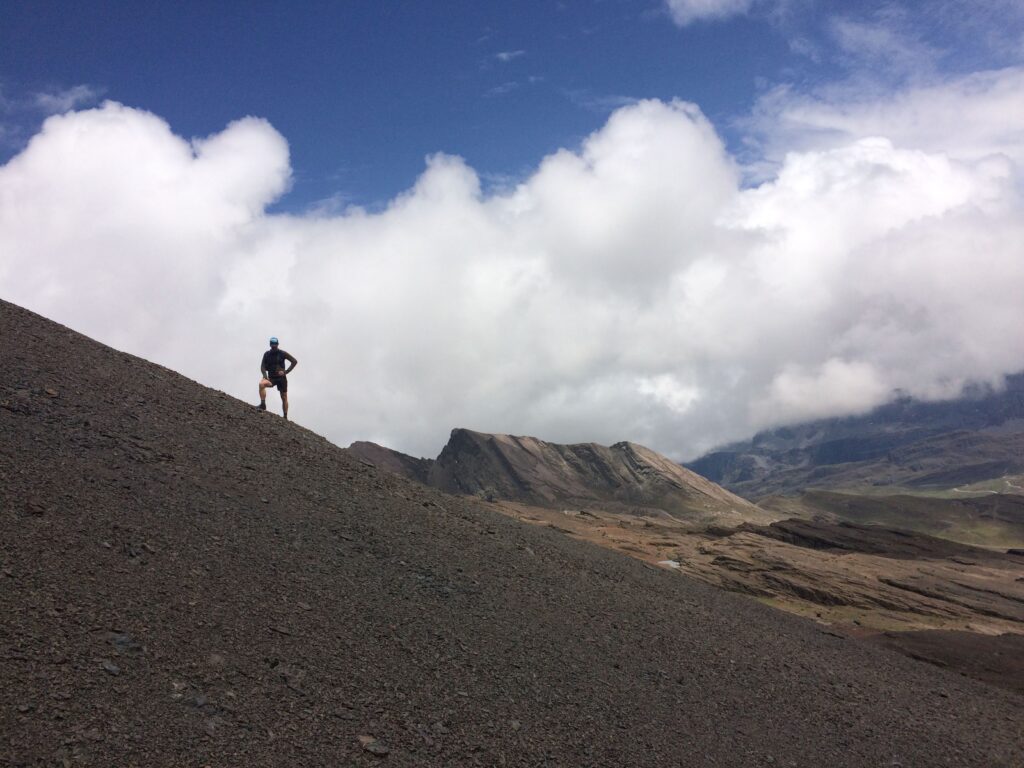
    A high-altitude hiker stands on a steep, rocky slope beneath dramatic clouds and jagged peaks—capturing the science of joy as a compass: a moment of alignment between effort, meaning, and awe in the midst of challenge.

    Life is hard. I have often compared it to climbing a mountain. Generally, climbing a mountain includes early mornings, think 3:30 a.m., strain on your legs as you climb steep terrain, burning lungs from lack of oxygen up high, strong winds on the summit ridge, repressed appetite, and a host of other challenges the mountain will throw at you. It’s easy to question your sanity during all the suffering, wondering why anyone would sign up for something like this.

    But when you stop to look around, you’re often in one of the most beautiful places on earth. The sunrises are always majestic. The sky a deeper blue. And the feeling of reaching the summit? Indescribable.

    Most people think of joy the same way,  as a destination, a summit if you will, that you achieve once life finally lines up the way you want. But the research tells a different story.

    Joy isn’t a finish line.
    It’s a compass.

    It doesn’t tell you where you are.
    It tells you where you’re aligned.
    And, it points toward what matters, what’s true, and what’s truly you.

    Across psychology, neuroscience, and human development, joy consistently shows up as a directional signal – a subtle but powerful indicator that you’re moving in harmony with your values, identity, and purpose.

    And just like on a mountain, when the weather turns or the trail disappears, a compass becomes your most trustworthy guide.

    In this article, we’ll explore five evidence‑based practices to cultivate joy, each one intended to help you read your internal compass with more clarity and confidence as you navigate the climb you call life.

    What Joy Really Is (and Why It’s Different From Happiness)

    Researchers make a clear distinction:

    • Happiness is a broad evaluation of life satisfaction.
    • Joy is a moment‑to‑moment emotional experience tied to meaning and authenticity.

    Joy is what you feel when your internal compass clicks into alignment.
    It’s the sensation of rightness – even in imperfect circumstances.

    This matters because it means joy is accessible even in seasons of stress, uncertainty, or change. Like a climber on a mountain, you don’t need perfect conditions. You just need alignment.

    5 Evidence‑Based Ways to Use Joy as a Compass in Your Life

    Below are five research‑supported practices that help you read, trust, and follow your internal compass.

    1. Reconnect With Your Core Values (Calibrate the Compass)

    Your compass only works when it’s calibrated.
    In human terms, calibration = values.

    Research shows that joy emerges when your actions align with what you value most. Values are the magnetic north of your emotional landscape. When you drift from them, the compass spins. When you return to them, joy points the way.

    On a mountain, this is the moment you stop, pull out your compass, and realize you’ve been veering off the ridge. One small adjustment changes everything.

    Try this:
    Think of a moment when you felt genuine joy.
    What value was being honored? Was it connection, creativity, adventure, service, beauty?

    Joy is the needle.
    Values are the north.

    2. Let Hardship Reset Your Bearings (Difficulty Clarifies Direction)

    One of the most powerful findings in joy research is this:
    Joy and suffering are not opposites.

    Hardship often resets the compass.
    It strips away the noise.
    It reveals what truly matters.

    On a climb, this is the moment when the wind picks up, the trail disappears, or fatigue hits hard, and suddenly you’re forced to reassess. Difficulty clarifies direction. It reminds you why you started. It sharpens your focus.

    Researchers describe this as a paradox: difficulty deepens meaning, and meaning creates the conditions for joy.

    Try this:
    When life feels heavy, ask:
    “What is this moment showing me about what matters most?”

    Pain doesn’t break the compass.
    It often makes it more accurate.

    3. Seek Joy in Relationships (Climb With Others Who Help You Navigate)

    Most joy is relational.
    Studies show that joy is amplified when shared – in families, friendships, teams, and communities.

    Think of relationships as the fellow travelers who help you read the map.
    They reflect back what you can’t always see.
    And, they help you stay oriented when the terrain gets rough.

    Every climber knows the power of a good rope team, people who pace you, encourage you, and keep you safe. Joy works the same way. It grows in connection.

    Try this:
    Create one small, recurring ritual of shared joy – a weekly walk, a family breakfast, a gratitude moment with your team.

    Joy becomes clearer when you’re not navigating alone.

    4. Practice Presence and Savoring (Slow Down Enough to Read the Compass)

    A compass is useless if you’re sprinting past it.
    Joy works the same way.

    Mindfulness, savoring, awe, and gratitude all help you slow down enough to notice the subtle pull of joy. It is the quiet “this way” that’s easy to miss in a rushed life.

    On a mountain, this is the moment you pause to catch your breath and suddenly notice the alpenglow on the peaks, the crunch of snow under your boots, the silence that feels like a blessing. The mountain didn’t change, but your awareness did.

    Try this:
    Pause once a day and ask:
    “What is good here, right now, that I might have missed?”

    Presence doesn’t create joy.
    It reveals it.

    5. Create Environments Where Authenticity Is Safe (Clear the Interference)

    A compass can’t function near strong interference.
    Neither can joy.

    In workplaces, families, and communities, joy emerges where people feel safe to be themselves – unguarded, unperformed, unpolished.

    Authenticity clears the static.
    It lets the needle settle.

    On a climb, this is the difference between hiking with people who pressure you to pretend you’re fine and hiking with people who let you be human – tired, exhilarated, scared, strong. Joy thrives in that kind of honesty.

    Try this:
    Ask yourself:
    “Where in my life do I feel most like myself?”
    Then ask:
    “How can I create more spaces like that — for myself and for others?”

    Joy thrives where people can show up whole.

    Conclusion: Follow the Compass, Not the Map

    Maps are rigid.
    Compasses are alive.

    Joy doesn’t give you a step‑by‑step plan.
    It gives you orientation and a direction that’s deeply personal, deeply meaningful, and deeply human.

    The research is clear: joy is not something you wait for.
    It’s something you follow.

    Just like climbing a mountain, the path will twist, the weather will change, and the terrain will challenge you. But if you keep checking your compass – your values, your relationships, your presence, your authenticity, you’ll keep moving toward what matters, one step at a time.

    Your compass is already inside you.
    Your work is simply to learn how to read it, and to trust where it points.

    References:

    Johnson, M. K. (2020). Joy: A review of the literature and suggestions for future directions. The Journal of Positive Psychology15(1), 5-24.

    Keach, J. A., Klotz, J. M., & Talis, G. J. (2025). Leading with Joy: Lessons from the Literature.

    Krumrei-Mancuso, E. J. (2020). Reflections on the science of joy: Current challenges and future directions. The Journal of Positive Psychology15(1), 58-62.

    Robbins, B. D. (2021). The joyful life: An existential-humanistic approach to positive psychology in the time of a pandemic. Frontiers in Psychology12, 648600.

    Van Cappellen, P. (2020). The emotion of joy: Commentary on Johnson. The Journal of Positive Psychology15(1), 40-43.

  • Driving With Intention: What a Ferrari Taught Me About Fatherhood

    Lately I’ve been thinking about the ideas in Zen and the Art of Motorcycle Maintenance by Robert M. Pirsig. If you haven’t read it, the book follows a father and son on a long motorcycle trip. Along the way, Pirsig reflects on Quality – what it is, where it comes from, and how it shapes a meaningful life. He suggests we recognize Quality long before we can ever hope to define it.

    A Car Built With Intention, A Life Built the Same Way

    Take, for example, the Ferrari 250 GT Lusso. It’s not the rarest Ferrari ever built (approximately 350 were produced), nor the fastest (the new 849 Testarossa likely takes that title). But each Lusso was hand‑finished with an almost meditative level of care. Every line. Every seam. And, every curve was shaped with intention. I’ve never driven one (and probably never will), but those who have, say the experience isn’t about speed or aggression. It’s about harmony. The twelve cylinders don’t roar so much as sing. It’s a car that begs to be driven well, not fast.

    The Lusso reflects the quiet discipline of a craftsman who cared enough to do something well simply because it deserved to be done well. And in that way, it mirrors the work of a father.

    The Quiet Craft of Fatherhood

    Fatherhood isn’t about speed or spectacle. It’s not measured in grand gestures or perfectly engineered plans. It’s shaped in the small, intentional moments of your life – the way you listen, the way you show up, the way you steady yourself before responding. Like the Lusso, the relationship you build with your children is hand‑finished over time. Every conversation. Every boundary. And, every shared laugh or late‑night worry. Each one is a line, a seam, a curve shaped with care.

    Where Small Moments Become Lasting Meaning

    A father who leads with intention creates a kind of harmony in his home. Not perfection, but presence. Not control, but connection. And over years, those moments accumulate into something unmistakable: a relationship defined by Quality – felt long before it can ever be fully explained.

    That’s where the real invitation begins.

    Choosing to Hand-Finish the Moment That Matter

    If you want to cultivate more Quality in your relationships, ask yourself: “Where in my life am I rushing past the very moments that deserve to be hand-finished?” Then choose to show up differently today. Don’t wait for tomorrow. Because in the end, the Quality of your life, and theirs, is shaped not by what you achieve, but how you choose to show up in the moments that matter most.

  • Belonging in the Age of Technology

    Have you ever felt like a ghost in a crowded room?

    I have.

    It’s that strange moment when you’re physically present but emotionally invisible almost as if you’re standing behind a pane of glass while everyone else mingles on the other side. You watch the laughter, the inside jokes, the easy familiarity, and you wonder if anyone will notice the quiet figure in the corner.

    I’ve always been a bit jealous of the people who can glide into a group like a bird joining a flock. Others, especially us introverts, move more like deer at the edge of a clearing, cautious, hoping for a sign that it’s safe to step in.

    This longing isn’t weakness. It’s wiring. Baumeister and Leary once argued that belonging is as essential as water or food. We don’t just want connection, we need it. Belonging is the emotional oxygen that keeps us alive. Somewhere along the way, our relationship with connection got tangled up with our relationship to technology.

    Back in my English undergrad days, we studied thinkers like Fish, Pirsig, Derrida, and Foucault, people who loved to peel back the layers of meaning in everyday life. During one of our debates, we found ourselves discussing the virtues and vices of technology. What struck me then, and still strikes me now, is how technology has always been a double-edged sword. It improves the human experience, yet it simultaneously creates distance.

    Merriam-Webster defines technology as “a manner of accomplishing a task, especially using technical processes, methods, or knowledge.” Our ancestors discovered fire, created clothing, and built shelter. These innovations made life a little safer and more comfortable, but they also began to create subtle separations within the tribe. Comfort can sometimes come at the cost of connection.

    This pattern becomes even clearer when we look at more recent history. Imagine a summer evening in the 1800s: children playing outside, neighbors gathered on front porches, conversations drifting like fireflies through the warm air. Community was not an event but a natural rhythm.

    Then electricity arrived, and with it, the radio. Families moved indoors to gather around a glowing box of sound. The porch, once a social hub, grew quieter. The television deepened this shift, drawing people further inside. The personal computer, the internet, and now AI have each added new rooms to the house of modern life, but with every new room, another door quietly closed.

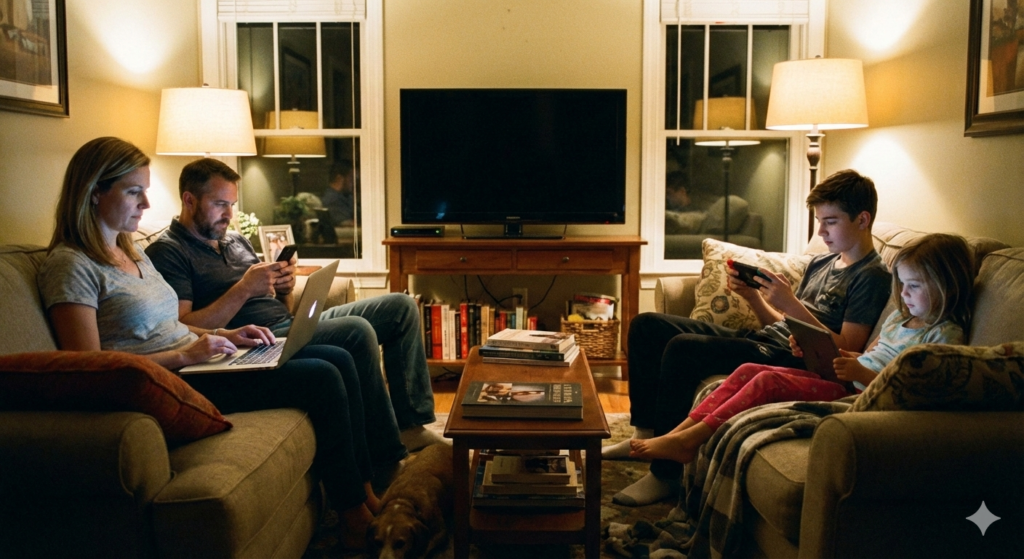
    Today, it’s common to see a family sitting together in the same living room while inhabiting entirely separate worlds. Parents scroll through emails, a daughter navigates social media, a son battles digital opponents. They share physical space but not emotional presence. The irony is striking: we search our screens for belonging while the people we long for are often sitting just a few feet away.

    This is not an argument against technology. Like fire, technology can warm or burn depending on how we use it. It is neither inherently good nor inherently harmful. It is a tool, capable of connection, creativity, and convenience; however, it’s also capable of distraction and quiet disconnection if left unchecked.

    The challenge, then, is not to reject technology but to relate to it intentionally. If belonging is as essential as Baumeister and Leary suggest, then we must protect the spaces where belonging grows. We must treat technology like a campfire: something that can bring us together when used wisely, but something that can blind us to one another if we stare into it too long.

    As we move into 2026, the invitation is simple:
    Be deliberate.
    Set boundaries.
    Look up.
    Notice the people in the room with you.

    Belonging doesn’t happen by accident. It happens when we choose connection – again and again, on purpose.

    References:

    Baumeister, R. F., & Leary, M. R. (2017). The need to belong: Desire for interpersonal attachments as a fundamental human motivation. Interpersonal development, 57-89.

    Merriam-Webster.com/dictionary/technology