Category: Wilderness & Adventure

Lessons from the trail, the river, and the campfire. What the outdoors teaches about resilience, presence, and the kind of growth that only happens off the grid.

  • Strike Anywhere

    A campfire, nine boys, and what they know that we’ve forgotten.

    Last night I took nine boys up the canyon to roast marshmallows. They were eleven to thirteen years old, and when we got to the campground I started in on a lesson about how to build a fire. They were all over the place. I could tell there was no interest in what I wanted to share — they all thought they already knew how. They were experts. They didn’t need my help.

    So, I handed each of them a strike-anywhere match and told them to go for it.

    It had rained the last two days. The wood wasn’t Alaska wet or Oregon wet — the kind that makes a fire nearly impossible — but it was Utah wet. Wet enough to be a nuisance, dry enough to light if you knew what you were doing.

    Nine Matches, No Fire

    Some of the boys gathered leaves and struck their match right away, thinking leaves would be enough. Others took their time, hunting down a few finger-sized twigs first. Some matches broke. (Side note: those green-tipped matches don’t work nearly as well as the red ones I grew up with.) Others blew out in the wind. Two boys decided to work together. They built it up the right way — match-sized twigs, then finger-sized, then small branches. The first boy struck his match. It broke. The second struck his. It didn’t light. He struck again. Nothing. He struck a third time and the green tip crumbled off the stick.

    Nine boys. Nine matches. No fire.

    It was starting to look like cold s’mores.

    My Match Died, Too

    I went quietly into the trees and gathered what I needed: match-sized twigs, then finger-sized, then wrist-sized. A fire needs three things in the right ratios: heat, oxygen, and fuel. I struck my match. The kindling caught. The flame climbed for a few seconds and . . . died.

    I handed each boy another match. The results were the same. Most of them tried the same thing they’d tried the first time.

    Here’s what I keep thinking about.

    What I Keep Thinking About

    Not one of those kids beat himself up.

    Nobody walked off to sulk. Nobody apologized. Nobody decided he was bad at fires. When a match broke, they shrugged and excitedly asked for another, thinking they could manage to get it going the second time around. When a flame blew out, they leaned over and tried again. They didn’t take any of it personally. The match failed. The match was the match. They were them.

    By the Time We’re Grown

    That’s the part most adults have forgotten.

    By the time we’re grown, a failed match means something about us. We strike, the wind takes it, and somewhere in the back of our heads a quiet voice starts in. Maybe I’m not cut out for this. Maybe I missed my shot. Maybe everyone else figured this out a long time ago. The match becomes a verdict. A bad afternoon becomes a story we tell ourselves about who we are.

    The boys hadn’t learned to do that yet. To them, a match was just a match. A broken one was just a broken one. You needed another one. That was it.

    Set Them Down

    On my second match, the fire finally took. The moment there were flames, the boys who’d been bouncing around twenty minutes earlier were leaning in. Why does the small wood matter? How close do the twigs go? What do you do when the wind picks up? They were ready to learn now. So I taught them.

    We talk a lot about second chances. That’s a comforting sentiment, and it’s true. But standing around that firepit watching nine boys burn through a fistful of matches without flinching, I started to wonder if the real lesson is something more subtle.

    The boys didn’t need to be told it was okay to fail. They already knew. What they needed was a little more wood, a little more time, and someone willing to show them the right ratio.

    Somewhere along the way, most of us stopped being those boys. We started carrying our broken matches around like proof of something.

    We could probably stand to set them down.

    Hi, I’m John!

    I’m a father, leader, outdoorsman, and the founder of PathForgeXP. I grew up in Moab, Utah, and I spend most of my time helping fathers reconnect with what matters through wilderness retreats and intentional living. I don’t have this figured out. I’m just a man on the trail, writing about what I’m learning along the way. 

    John Bishoff, founder of PathForgeXP, hiking through the red rock landscape near Moab, Utah.
  • The Fire That Asked the Real Question

    What seven men around a campfire taught me about the real foundation of fatherhood.

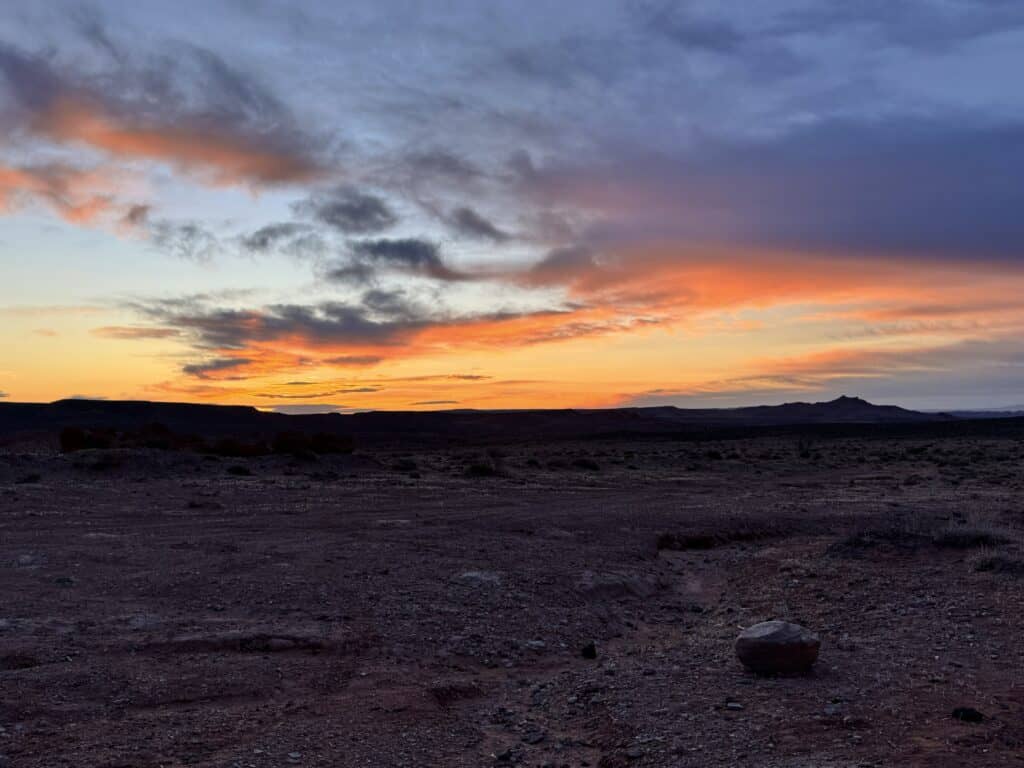
    Desert sunset over the red rock landscape near Moab, Utah, where seven fathers gathered around a campfire to talk about what matters most.

    A few weeks ago, I was in Moab for a beta run of one of our PathForgeXP retreats. Seven men sat around a campfire after a long day in the desert, and I have been thinking about what I learned ever since.

    For the drive down to Moab, I gave them a few prompts about their experience as children. The behaviors they learned from their fathers and the things they wish they could do differently now that they have children.

    As they started opening up, the conversation quickly turned into something valuable, vulnerable, and real. The weight of fatherhood and the strain of marriage. About the disorientation of leading in a world constantly on the move. Every one of them was successful by any external measure. Careers, families, responsibilities — they had built the lives they were supposed to build. And yet, sitting under a canopy of brilliant constellations contrasted against a dark sky, with the fire between them, what came out was not arrogance or pride. It was confusion. Somewhere along the way, they become lost. Not geographically. Not professionally. But in the deeper sense. The kind of lost where you look at your own life and realize you’re not sure you recognize the person in the mirror.

    The Thing Beneath the Thing

    That night I listened more than I talked. What I heard, underneath the specific stories and frustrations, was a pattern. These men had lost contact with their values. They had stopped focusing on what truly mattered. It wasn’t intentional. But in the pursuit of a degree, a career, a family, of all the things, they forgot what was most important. They still cared, deeply, about their relationships, showing up as a husband and father, and building a meaningful life, but they had also lost the connection to who they were deep down.

    The Foundation Nobody Talks About

    Before you can build a life around your values, you need to have an unconditional love for yourself. And I don’t mean that in a bumper sticker or self-help platitude kind of way. It has to be structural — a foundation, if you will — that is able to bear the weight of the problems this world throws at you.

    We’re flawed. We have weaknesses. And, we are the only ones that see inside our heads. Only we know who we truly are. Sometimes that scares us. But there’s a softer side that we often forget. We need to learn to accept ourselves unconditionally, flaws and all. It’s what makes us human and it’s part of our experience.

    Without that acceptance, everything we build on top becomes unsteady. Our values aren’t really our own. They’re borrowed from whoever we’re trying to impress. Our relationships aren’t genuine. They become transactional — we’re looking to get something out of them that we haven’t figured out how to give ourselves. Validation. Reassurance. Proof that we’re enough.

    What This Looks Like at the Kitchen Table

    Here’s where it gets practical. Your daughter comes home with an F on her report card (I know what that’s like). If you haven’t settled the question of your own worth, that F becomes about you. It’s a reflection of your parenting. Your failure. And, your response, whether it’s anger or a lecture about responsibility, is really about managing your own discomfort, not helping your child.

    But if you have that foundation, the F only matters in relation to how your daughter is actually doing. You’re more concerned with her performance and her life than with what her grades say about you. You get curious instead of reactive. You ask better questions. You sit with her instead of standing over her.

    One response is about you. The other is about her. And, our kids can feel the difference, even when they can’t name it.

    The Transactional Trap

    This is what I saw around the campfire, even though none of those men used the word. They had built meaningful relationships — with their wives, their kids, their colleagues — that had quietly become transactional. Not because they were selfish (none of them were). Because they were running on empty in a place they hadn’t learned to fill for themselves.

    Think about it. When we don’t love ourselves, we need our spouse to make us feel valued. We need our kids to make us feel competent. We need our teams to make us feel important. And, those needs, unspoken and often unrecognized, shape every interaction. They turn love into a ledger. They turn fatherhood into a performance review.

    The people around us carry the weight of it without fully understanding why things feel heavy. A wife senses that affection has conditions. Kids sense that approval is tied to their achievements. Nobody says it out loud. But everyone adjusts around it. Everyone feels it.

    What the Fire Revealed

    That night, underneath all the talk about values, identity, and purpose, those seven men were saying something they’d never said out loud: they still hadn’t settled the question of whether they were enough. Not just as husbands or fathers or leaders, but as men trying to live a real, honest life on this incredible planet.

    I understand that because I’ve been there. I’ve been the father who took his kid’s struggles personally — not because I cared so deeply about her in that moment, but because I hadn’t separated her story from mine. That’s hard to admit. But it’s also where the real work starts.

    And, this isn’t something we fix once. It’s more like a practice. A returning, over and over, to the question of whether we can sit with who we are without reaching for something to make it feel like more.

    The Order of Things

    Most of us try to start with values. We make lists. We set intentions. And, we declare what we stand for. And, that’s not wrong. But if the man standing behind those declarations doesn’t believe he’s worthy of living them, then the values become another performance. Another way to earn approval. Another transaction disguised as conviction.

    Self-love has to come first. Not the loud, public kind. The quiet kind. The kind where we stop needing our daughter’s report card to say something about us. The kind where we can sit with our own failures without spiraling. The kind where our worth is not up for negotiation in every conversation, every meeting, every interaction at the dinner table.

    From that foundation, values become real. They stop being aspirational. They’re just true. And, the people in our lives stop being mirrors for our insecurity and become people we actually see.

    The Invitation

    If you’re a man who has done the work of building a life — career, family, responsibilities — and something still feels off, the missing piece might not be another goal or another strategy.

    It might be the question you’ve been carrying since long before the career started. The one that doesn’t have anything to do with what you’ve accomplished or who depends on you.

    Do you love the man you are when no one is watching and nothing is at stake?

    That’s where the values start. That’s where the relationships become real. And, that’s where the work of intentional fatherhood actually begins.

    Hi, I’m John!

    I’m a father, leader, outdoorsman, and the founder of PathForgeXP. I grew up in Moab, Utah, and I spend most of my time helping fathers reconnect with what matters through wilderness retreats and intentional living. I don’t have this figured out. I’m just a man on the trail, writing about what I’m learning along the way. 
    John Bishoff, founder of PathForgeXP, hiking through the red rock landscape near Moab, Utah.