Author: John Bishoff

  • The Wilderness Gap (or, the day my phone took the hit)

    What a hard crash on a familiar trail taught me about leadership.
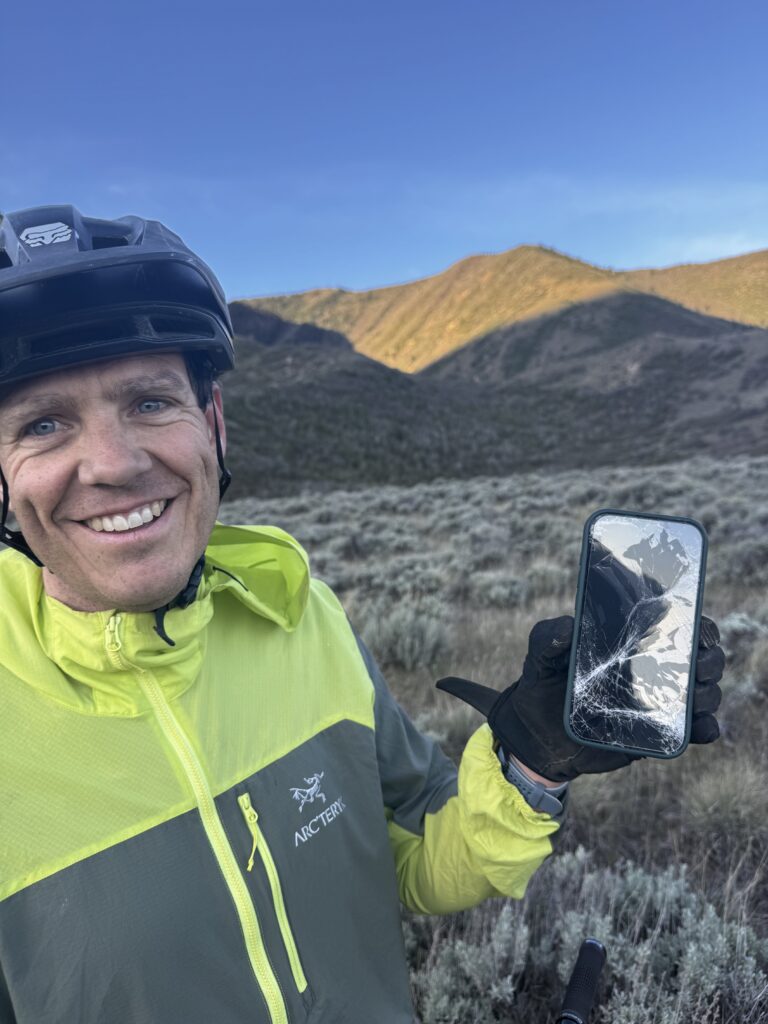
    Smiling mountain biker in helmet and neon jacket holds up a phone with a shattered screen on a sagebrush trail at sunrise.

    A few weeks ago, I crashed — hard.

    I was riding a familiar trail for the first time this season, but the crew had added a few new features. Instead of taking things cautiously, I hit each one. They got progressively harder until I reached the last one: a rock set into the trail to create a perfect launch pad for some serious air. Instead of squeezing the brakes to slow down, I pedaled a little harder for extra speed. I was going to send it.

    The trail took a right turn into a decent-sized berm, and instead of landing where I needed to, I overshot and came down on top of it. I tried to over-correct, and as I did, my front tire hit a rock and threw me over the handlebars. I lay on the trail for a few minutes, taking inventory, trying to feel whether anything was broken or badly scraped. At 44, our bodies don’t heal the way they did at 25. To my surprise, I had minor road rash on my right knee, ankle, and elbow, but other than that I was fine. Nothing was broken.

    The Inspection

    I got up slowly, inspected my bike (everything was fine), and just then my wife came around the corner in her slow and steady manner. She looked at me with concern and asked what had happened (I don’t crash very often — maybe I’m not sending it hard enough?). I told her the whole story. We chatted on the side of the trail for a minute, then kept riding.

    Fifteen minutes later, I reached into my pocket for my phone to take a picture and, to my surprise, found it broken. The screen was shattered, and the titanium frame of my iPhone was mangled and twisted. I crashed hard, I thought, but I didn’t think I’d busted the phone. After all, it was in my pocket. It must have hit a rock.

    A few hours later, I figured out what had actually happened when I looked at my thigh. I had a huge bruise running across my leg — except for one clean patch, exactly where the phone had been. When I went over the handlebars, my thigh slammed into the bars, and the phone took most of the impact. I’m glad it was there. The bruise could have been a lot worse.

    Sending It Down the Trail

    Often, as leaders, we feel like we know where we’re going. We have the answer, and we’re quick to share it, certain we’ll just keep getting down the trail. But how often do we actually stop to pay attention to the environment around us? Do we really listen — to our teams, our spouses, our kids? Or do we just send it off the features we think we know, assuming all will be well?

    As a leader of organizations, I’ve watched this play out more times than I’d like. A well-intentioned leader knows the trail, and for the sake of efficiency, they don’t take the time to assess the new features. Maybe they don’t have the time. Or, they know the terrain. Perhaps they’re having too much fun to slow down for the mundane work of checking the trail. Whatever their intention, they keep going — full send, barreling toward the finish line.

    The Outcome

    The outcome is the same. They overshoot the landing, hit a rock, and eat it. And here’s the part that should give us pause: you may not even notice anything is wrong. You may get up, reassess, and keep going. But something will be wrong. Further down the trail, you’ll notice that one of your top performers seems disconnected. Or a team you rely on doesn’t quite deliver the way you’d hoped. Or the company misses the goals you set. Or you realize you’re slowly losing your relationship with your spouse, your kids, yourself.

    Too often, the people closest to us experience a different version of us than the one we think we’re giving. We’re too focused on “sending it” to notice the people right beside us. That distance — between who we think we are and who others actually experience — is what I call the wilderness gap. And it’s where leaders are most often misaligned.

    Closing the Gap

    The fix isn’t complicated, but it asks something most of us resist: slow down. The trail I rode that day wasn’t new — I’d ridden it a dozen times. What got me wasn’t the trail; it was the new features I assumed I could take at speed. Leadership is the same. The terrain you know is rarely what takes you out. It’s the new thing you didn’t bother to read because you were sure you’d seen it before.

    So before you send it, look. Tap the brakes for a second. Ask the team member who has gone quiet how they’re actually doing — and then wait for the real answer, not the one that lets you keep moving. Ask your spouse what it’s been like to live with the version of you that’s been showing up lately. Read the new feature before you launch.

    None of this is comfortable, and I’m still learning to do it. I’d rather pedal harder than tap the brakes. But the phone in my pocket reminded me of something. Sometimes the thing that takes the hit for us is right there, absorbing impact we never see — until we finally stop and look at the bruise.

    Here’s what I’m pondering and where I’ll leave it with you, too: Where on your trail are you sending it off a feature you haven’t actually looked at yet? And who is quietly taking the impact while you ride on?

    Hi, I’m John!

    I’m a father, leader, outdoorsman, and the founder of PathForgeXP. I grew up in Moab, Utah, and I spend most of my time helping fathers reconnect with what matters through wilderness retreats and intentional living. I don’t have this figured out. I’m just a man on the trail, writing about what I’m learning along the way. 
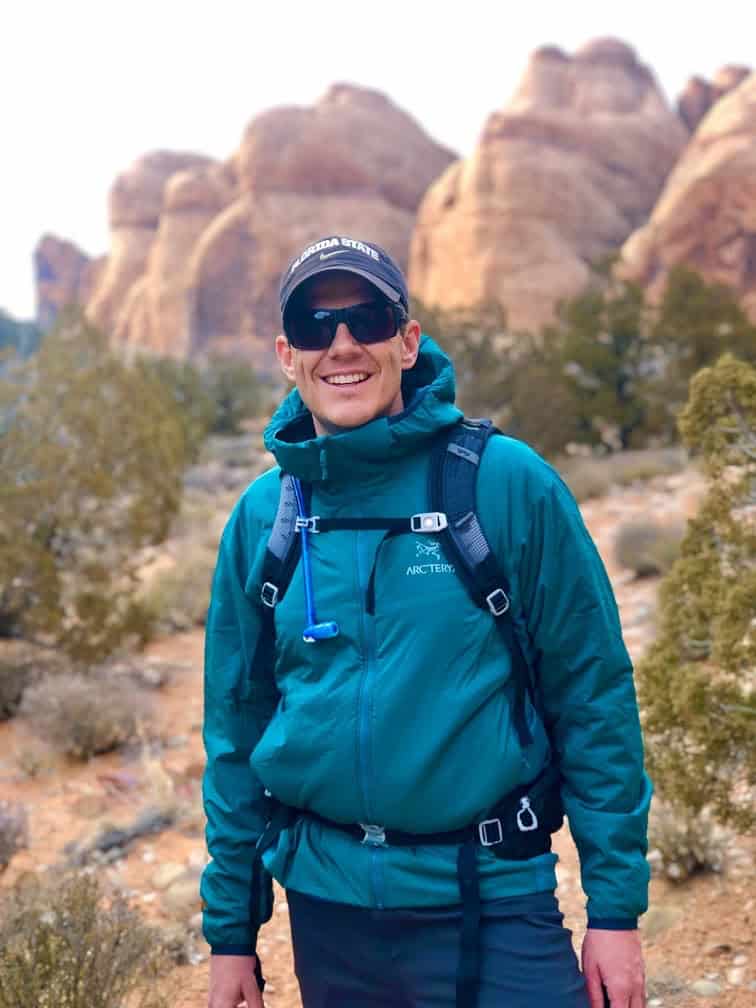

    John Bishoff, founder of PathForgeXP, hiking through the red rock landscape near Moab, Utah.

  • The Things They Left Me

    What three grandparents taught me about what actually lasts.

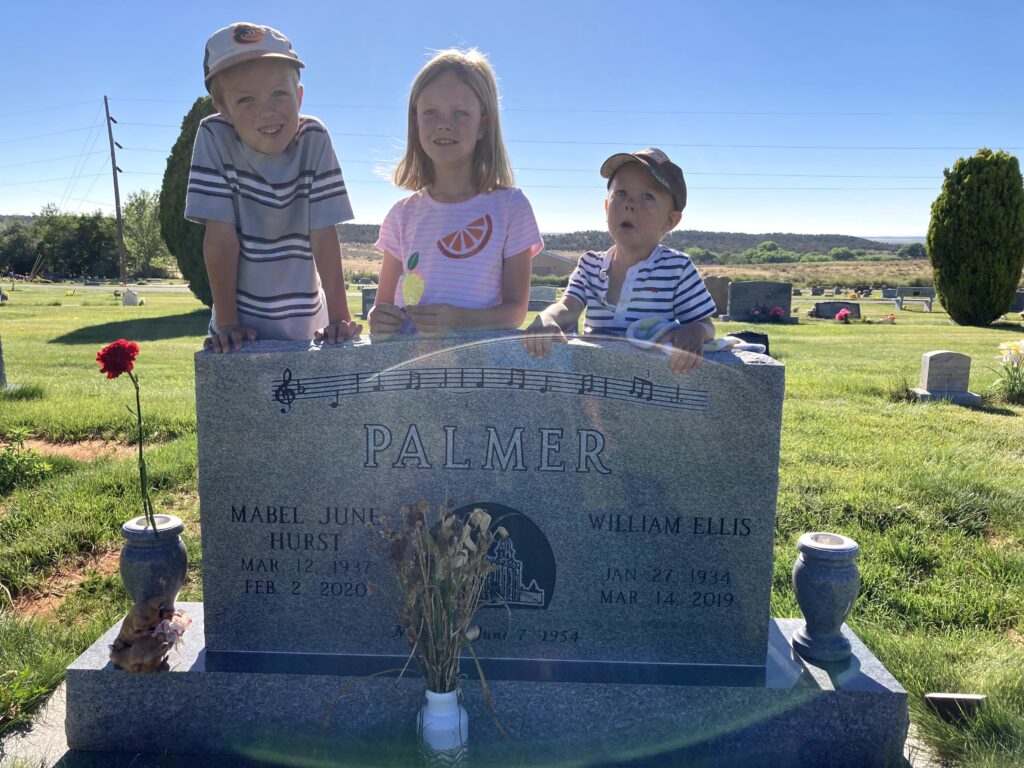
    Three young children stand smiling behind a granite headstone in the Blanding, Utah cemetery. The stone reads PALMER and bears the names of Mabel June Hurst Palmer (1937-2020) and William Ellis Palmer (1934-2019), with a hand-engraved musical staff and notes carved across the top, the melody of "The Land I Love." Open grassland and juniper hills stretch behind them.

    Happy Friday. Memorial Day weekend is here, and I want to spend a few minutes with some of the people in my life who have passed on to the other side.

    Three of my four grandparents are gone now. My paternal grandfather is still alive, and I’ll see him Sunday afternoon when we celebrate my dad’s birthday. But before I tell you about each of them, here’s what I keep circling back to: the impact we leave on the people we love is the greatest thing we leave behind. The things we own, the hours we pour into work, the effort we spend accumulating, all of it disappears the moment we pass on. None of it comes with us. It’s cliché, and it’s also true. The only thing of real value we carry forward is the relationships we’ve built. And we build those through experiences. The more time we spend with people, the more we love them, the more we see them as they actually are. The more we learn to love ourselves, the more we can show up for the people who need us.

    Core and Balance

    The research on this is clear. There are two kinds of family activities, and high-functioning families need both. Core activities are unplanned, consistent, often inexpensive, sometimes spontaneous. They build stability and closeness. Balance activities are the planned ones, the novel and thought-out experiences that usually cost more and stretch a family in new directions. They build adaptability. Every family fills these categories differently. We love to ski, so we ski every Saturday in the winter, and sometimes on a random Wednesday when nothing else is going on. That’s core. A beach vacation to Florida, with the plane tickets and hotel rooms and restaurant meals, that’s balance.

    A family in Florida might flip it entirely. They go to the beach the way we go skiing, and they ski the way we vacation. The category never mattered. What matters is that we keep spending time on the people we love most, because when everything else falls away, that time is the only thing that stays.

    I’ve been thinking about that all week, because when I look at what my grandparents actually left me, none of it was a thing. It was time, pressed into something I could hold.

    The Land She Loved

    Mabel and William Ellis Palmer, the writer's maternal grandparents, sit together against a wood-paneled wall of John Bishoff's childhood home in Moab, Utah. She wears a lavender shirt and floral skirt; he wears a white short-sleeved shirt and a striped tie. A tabby cat is curled on a shelf behind them.

    My Grandma Palmer was deeply musical and loved a good adventure. One song in particular, “The Land I Love,” she wrote about the country in southeast Utah. The red rocks. The ponderosa and pinyon pines. The sagebrush. Every time I’m back home, the land sings it back to me.

    She also spent the last forty years of her life on crutches. Her bones were brittle and she was almost always in pain, through more surgeries than I can count. I don’t remember her complaining. What I remember is how completely she focused on her grandkids. Her body was failing, and she chose, over and over, to spend what little she had on us. That is a core activity in the truest sense. Unplanned, consistent, costing nothing but the only thing that matters.

    The Voice and the Ranch

    Her husband had a voice people compared to Frank Sinatra. Better, even, though I’ll admit I’m biased. Grandma wrote “The Land I Love” for that voice, and when he sang and she played, it was close to magic.

    He loved his ranch in Verdure. As a kid I’d spend my evenings with him while he told stories about being eight years old and alone out there, with nothing but his horse Tiny and his gun. He taught me to love wild country. He loved a good horse ride, and when he got too old to ride, we took drives in his truck around Blanding instead. The horse became a truck. The thing underneath never changed. He wanted to be on the land, and he wanted me next to him. That’s the experience he handed down, and I’ve been chasing it on slickrock and in cold streams ever since.

    The Bike

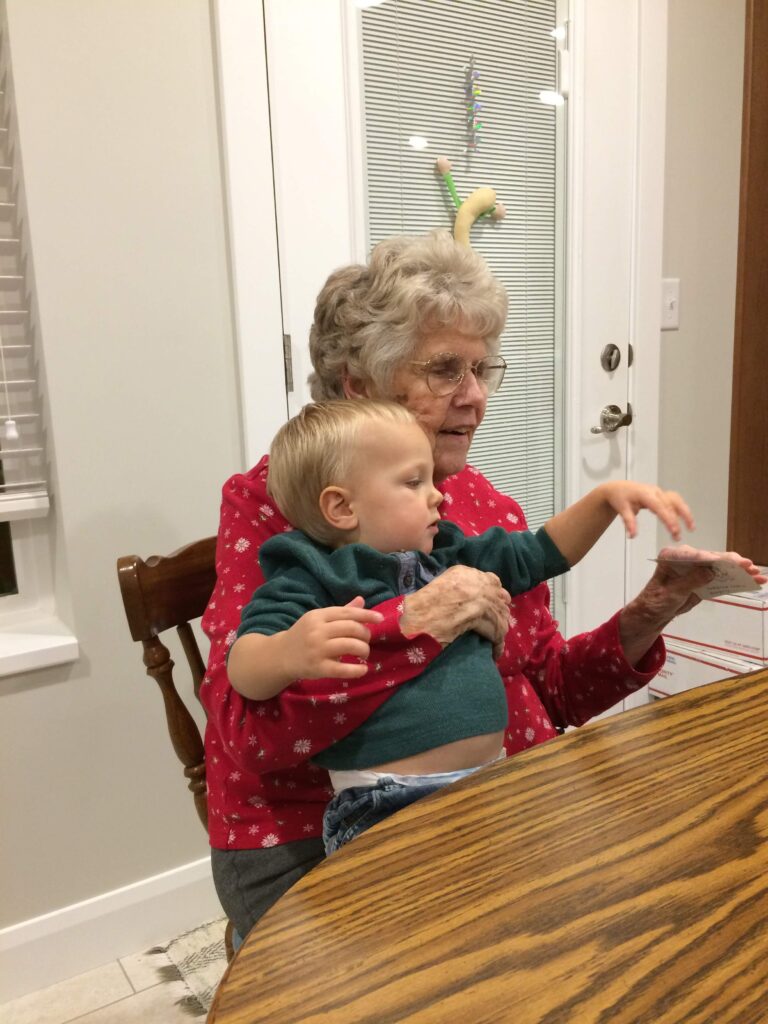
    The writer's paternal grandmother, white-haired and wearing glasses and a red snowflake-print sweater, sits at her kitchen table holding her young grandson on her lap. The toddler, in a green sweater, reaches toward something they're looking at together. An ordinary afternoon, the kind the essay is built around.

    My paternal grandmother died last year. She was at every one of my games. When we played away and my parents couldn’t make it, she and my grandpa were the ones in the stands. She loved a good table game, and we spent hours on Phase 10, Farkle, and dominoes. Pure core activity. Nothing planned, nothing expensive, just presence on repeat until the repetition itself became the relationship.

    Before she passed, she gave us her childhood bike. Her father had given it to her when she was about ten, and he died the year after. That bike was her last memory of him, and she carried it for a lifetime. So when it came to me, it came with all of that weight. A man I never met loved his daughter enough to give her a bike, and eighty years later I’m holding the proof. He’s gone. The bike remains. The love rode it all the way down to me.

    What Actually Gets Passed Down

    Not one of them left me an inheritance in the way we usually mean the word. They left me a song the desert still plays, a love of the land learned from the seat of a truck, and a bike that carries four generations of one family’s affection.

    In every case, what they left me was an experience that had become a relationship and then got handed forward. The core activities and the balance activities were never really about skiing or beaches or table games. Those were just the containers. What was being built, every Saturday and every Wednesday and every evening on the ranch, was the only thing any of us gets to keep.

    And that reframes the question I have to ask as a father. I have three kids, and I spend real energy worrying about what I’ll be able to provide for them. But my grandparents didn’t provide their way into my memory. They showed up their way into it. Grandma Palmer on her crutches, choosing her grandkids over her own pain. Grandpa in the truck because he couldn’t manage the horse anymore but still wanted me beside him. Grandma in the bleachers at the away game nobody else came to.

    The Honest Part

    I’m still learning this one. My kids are getting older, the teenage years are loud, and the temptation is to measure my fathering by what I can give them and where I can take them. The balance activities are easy to feel good about. They photograph well. They feel like effort.

    But I don’t think my kids will remember the trips the way I want to believe they will. I think they’ll remember the Saturdays. The ordinary, repeated, unremarkable presence that adds up to something they won’t be able to name until I’m the one who’s gone and they’re holding whatever I managed to hand them. I’d like it to be a bike. Or a song. Or just the memory of a dad who kept showing up on the random Wednesdays, when nothing was happening and there was nothing to capture, because that turned out to be the whole thing.

    So this Memorial Day, while we remember the people who’ve passed on, maybe the better question is about the people still here. The ones in your bleachers. The ones who’ll someday tell stories about your truck, your kitchen table, your random Wednesdays.

    What are you building right now that someone will carry after you’re gone? Are you spending your days on the things that come with you, or the things that don’t? And the person who will one day hold the proof of how you loved them, when did you last give them an ordinary afternoon?

    Hi, I’m John!

    I’m a father, leader, outdoorsman, and the founder of PathForgeXP. I grew up in Moab, Utah, and I spend most of my time helping fathers reconnect with what matters through wilderness retreats and intentional living. I don’t have this figured out. I’m just a man on the trail, writing about what I’m learning along the way. 

    John Bishoff, founder of PathForgeXP, hiking through the red rock landscape near Moab, Utah.

  • What Will Be Etched on Your Stone?

    On legacy, intentional fatherhood, and the question the petroglyphs keep asking—what does it mean to be etched for a thousand years.

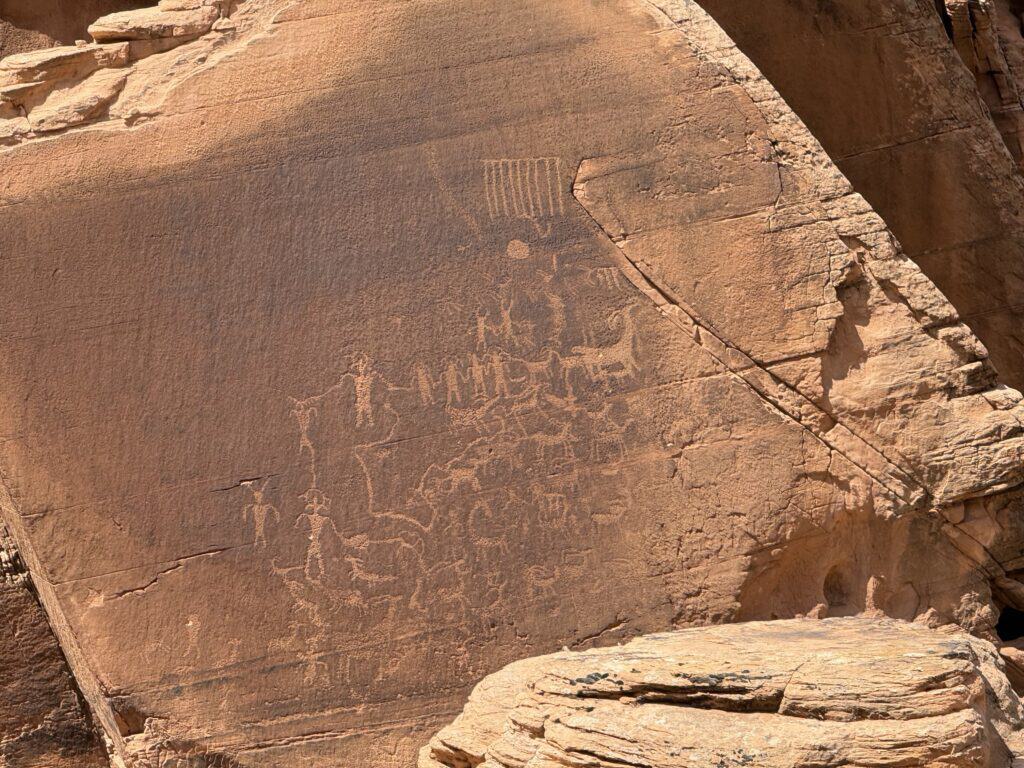
    Ancient petroglyphs pecked into a sunlit sandstone cliff in southeastern Utah, showing human figures, animals, and abstract markings on the desert rock face.

    In the canyon behind my childhood home, there are petroglyphs. They have been there at least a thousand years. Figures pecked into black desert varnish, hands pressed against sandstone, the bent flute player called Kokopelli appearing again and again as if he had something important he needed to keep telling us.

    In the canyon behind my childhood home, there are petroglyphs. They have been there at least a thousand years. Figures pecked into black desert varnish, hands pressed against sandstone, the bent flute player called Kokopelli appearing again and again as if he had something important he needed to keep telling us.

    What the Stone Holds

    A person standing at a sandstone wall with a hammerstone and a chisel is making a decision. The work is slow. Each line is an hour. One figure might take a day. Sandstone is patient but unforgiving. Once the mark is made, it’s made. There is no editing. There is no taking it back.

    This is what makes petroglyphs different from almost everything else humans have ever made. Pottery breaks. Wood rots. Cloth disintegrates. Words spoken into the air are gone the second they’re spoken. But a figure carved into a canyon wall in 1100 AD is still there, still legible, and still asking the same questions.

    The Monks on the Sidewalk

    When I was young, a group of Tibetan monks came to Moab and made a sand mandala on the sidewalk near the school. I remember watching them lean over the work with small metal funnels, tapping out grains of colored sand into patterns of impossible precision. They worked for days. The mandala bloomed slowly into something beautiful, full of geometry, color, and meaning I did not understand.

    When they finished, they swept it away.

    Up the road from where they worked, in the canyons around town, the petroglyphs were still there. They had been there for a thousand years. They are there today.

    I have thought about this contrast for most of my adult life without knowing why it stayed with me. I am finally beginning to understand. The monks were not careless. They were doing something the rest of us almost never do – being completely honest about what they were making. They knew the wind would come. The whole point was to dedicate time to something temporal, knowing it would not last.  Which, interestingly, made the work more sacred, not less.

    Most of us aren’t that honest. We are also working in sand. But, we don’t admit it.

    What the Sand Holds

    Most of what we spend our lives on is not being written in stone. It is being written in sand. And unlike the monks, we have convinced ourselves it is something else.

    The quarterly numbers. The title on the business card. The car in the driveway. The house with the right zip code. The vacation that photographed well. The promotion. The bonus. The recognition at the company offsite. The new shoes, the new watch, the new something to replace the something that was new six months ago.

    I am not saying these things are bad. Some of them can bring real joy. Some of them are the honest fruit of meaningful labor. I have wanted them too, and I have worked for them, and I have felt the small flare of satisfaction when they arrived. None of that is shameful. What is worth examining is the priority.

    Because the tide comes in – always. The market shifts and the title goes away. The car gets traded. The house is sold. The promotion gets handed to someone else two years after you stopped being indispensable. The recognition fades within the time it takes to drive home from the event. These things are real, but they are written in a medium that does not last. They are tide-pool calligraphy. Beautiful at low tide, gone by sunset.

    The work we tend to dedicate our lives to, which pulls us out of the house early and keeps us at the laptop after the kids are in bed, is almost without exception sand-work. And, if we’re honest with ourselves, we know it.

    The Question No One Wants to Sit With

    Someday, you will no longer be here. This is a hard sentence to read and it’s a hard sentence to write. But it is the sentence that gives everything else weight.

    You will live your life and one day it will end. The people who knew you will tell stories about you for a generation, maybe two. After that, you will become a name on a headstone and a face in a photograph that someone’s grandchild does not quite recognize.

    What story will you have etched into the stone?

    Will the remnant be that you were always angry? That you were never satisfied? That you worked very hard but missed the point because you were never at home? Or will the remnant be the small unphotographed things that actually shape a child: the breakfasts, the bedtime conversations, the willingness to put the phone down, the laugh at the dinner table, the time you said the thing your kid needed to hear when they didn’t even know they needed to hear it?

    The petroglyphs in southeastern Utah will still be there in another thousand years. Long after the company we built has been forgotten. Long after we have relinquished our cherished job title to someone else. The desert does not care about org charts.

    So the question is not whether you will leave something behind – you will. The question is what will you leave behind.

    My Grandmother’s Headstone

    My grandmother wrote a song for my grandfather called “The Land I Love.” When she died, the family had the song etched onto her headstone. I have stood there and read it, and the strange thing about that piece of granite is that it does not list a single thing she accomplished. It does not say what she did for a living. Nor does it mention any title she held or any sum of money she earned or any house she owned.

    It says she loved a man, and she loved a place, and she wrote a song about both.

    That is what was worth putting in stone.

    I think about her headstone often. I think about it when I am tempted to spend a Saturday morning answering email instead of making pancakes. Or, when I am about to say yes to a meeting that I should decline. I think about it when one of my kids asks me a question and I have to decide, in the space of about two seconds, whether to actually look up from my seemingly important task or to respond casually, focused on the important work at hand. Those small decisions are the chisel. Each one adds a line.

    We are all etching, but the question is, what are we etching.

    What They Both Knew

    The people who made those petroglyphs and the monks who swept the mandala across the sidewalk were doing different things. One group was trying to leave something that would last. The other was practicing the deliberate release of something they knew would not. But they had one thing in common, and it is the thing that separates them from most of us.

    They were honest about the medium they were working in.

    The carvers knew sandstone was permanent and they treated it with the seriousness that permanence requires. The monks knew sand was impermanent and they treated it with the seriousness that impermanence requires. Both groups looked at what was in front of them and refused to lie about what it was.

    Most of us spend our lives not being completely honest about the medium we are working in. We treat the urgent email like it is being carved in stone, yet we treat the time at the kitchen table like it is sand. We have the two reversed, and we know we have them reversed, and we keep doing it anyway because the reversal is what rewards in the short-term.

    A thousand years from now, when our posterity is walking through our canyons, I hope they find something carved in stone. Not literally. Not on a wall in a desert. But in the people we raised. In the relationships we tended. In the way we showed up at the small unphotographed kitchen tables that turn out, in the end, to be the only thing that mattered.

    The titles will be gone. The money will be gone. The things will be gone.

    The stone will remain. And the only question is what you put on it.

    Hi, I’m John!

    I’m a father, leader, outdoorsman, and the founder of PathForgeXP. I grew up in Moab, Utah, and I spend most of my time helping fathers reconnect with what matters through wilderness retreats and intentional living. I don’t have this figured out. I’m just a man on the trail, writing about what I’m learning along the way. 

    John Bishoff, founder of PathForgeXP, hiking through the red rock landscape near Moab, Utah.

  • THE SONG I DON’T PICK

    Or, why I haven’t taken a singing lesson in thirty years.

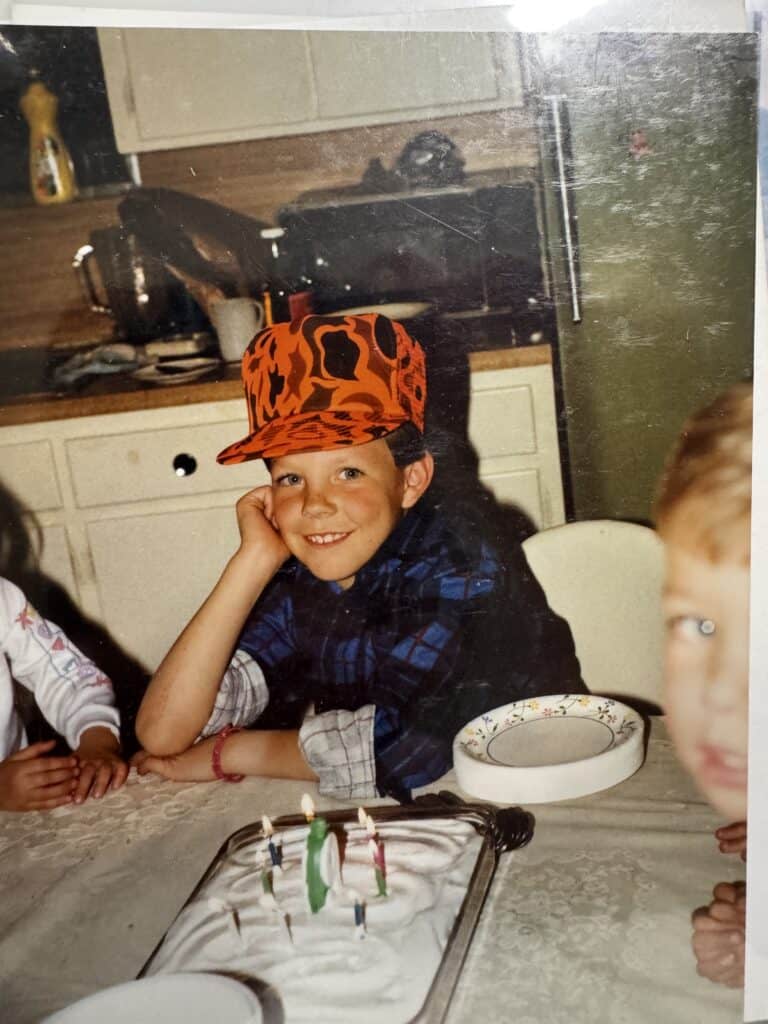
    The author as a boy in his grandmother's kitchen celebrating his birthday, wearing an orange camo cap and blue plaid shirt behind a candlelit cake.

    Last week after our kids were in bed, my wife and I were in the kitchen and I told her, again, that I sometimes think about taking singing lessons. I said it, casually, the way you mention something you’re not going to do. She listened. We’ve had this conversation a few times.

    I haven’t taken the lesson. I haven’t picked the song I’d want to sing. Honestly. . . I haven’t picked any song.

    Around the Piano

    When I was a kid, I loved to sing. My mom would gather us around the piano and play, and we’d sing along. I thought every family did this. I thought it was something kids and parents simply did together.

    My grandparents made it bigger. My grandma wrote music and played the piano masterfully. And, my grandpa sang in churches across southeastern Utah, and some people said his voice rivaled that of Sinatra. I loved sitting in their living room, listening to my grandma play and my grandpa sing. Some of the most tender moments of my childhood are around that piano.

    The Audition

    In sixth grade, I tried out for the traveling choir. I thought I was a shoo-in. After all, I loved singing, and I came from a family that could sing. I didn’t make it.

    That was the end of my singing career.

    After the Audition

    A year later we moved to Moab. It was a smaller community, with more opportunities to participate in school activities. I could have tried out for everything. I didn’t. By then I had decided I wasn’t a singer. The audition had told me, and, quite frankly, I had agreed. By seventh grade I wasn’t even letting myself try.

    The verdict didn’t just stop me from singing one time. It restructured what I was willing to want.

    Thirty years of not really singing. Sure, I sing in the car. I sing at church. But, never in the choir. I never audition or let anyone listen on purpose.  More often, I make a joke about my inability to sing. My sister has more musical talent in her left pinky than I have in my whole body. I’ve said that line so many times I almost believe it.

    And Yet

    Sometimes I think about taking singing lessons. I’ve told my wife about it more than once. She knows. It comes up enough that she’s stopped being surprised by it.

    But I have never picked a song. Not even in my head. The thought lives at the level of lessons. Never at the level of a particular song, the one I would want to be able to sing.

    That’s what buried yearning looks like. You keep it abstract enough that it can’t disappoint you.

    The Reasonable Answer

    When I think about why I don’t do it, the answer comes out reasonable. I should put my energy elsewhere. There are things only I can do for the people who depend on me. There are talents I have that actually bless people. Nobody would want to hear me sing now anyway. A man my age, taking lessons for something he isn’t going to be good at, is wasting his time.

    You see how logical that sounds?

    It’s the same protective move as the audition, dressed up as maturity. The eleven-year-old learned that wanting something meaningful and not getting it hurts. And the grown man? He found a way to bury that desire. He says, “I’m only worthy of my own time if I’m using it to serve someone else.”

    The Side Effect

    My grandparents weren’t trying to bless anyone. They were doing it because they loved it. She played because she had been playing her whole life. He sang because his voice wanted to come out of him. The blessing was a side effect.

    I was a kid in that room, being blessed by people who weren’t doing it for me. They were doing it purely for the enjoyment. And, that joy spilled over. It can’t be manufactured. It only comes naturally.

    Honestly, I still don’t know what I’m going to do with this thought. I’m not telling you I scheduled the lesson because I haven’t. I still have no clue what song I’d even sing.

    What I am saying is there’s a question I’ve been holding for thirty years, and it’s not really about singing.

    What counts as a legitimate use of your energy? Is joy allowed to count for itself? Or does it always have to bless someone first?

    Hi, I’m John!

    I’m a father, leader, outdoorsman, and the founder of PathForgeXP. I grew up in Moab, Utah, and I spend most of my time helping fathers reconnect with what matters through wilderness retreats and intentional living. I don’t have this figured out. I’m just a man on the trail, writing about what I’m learning along the way. 
    John Bishoff, founder of PathForgeXP, hiking through the red rock landscape near Moab, Utah.
  • Strike Anywhere

    A campfire, nine boys, and what they know that we’ve forgotten.

    Last night I took nine boys up the canyon to roast marshmallows. They were eleven to thirteen years old, and when we got to the campground I started in on a lesson about how to build a fire. They were all over the place. I could tell there was no interest in what I wanted to share — they all thought they already knew how. They were experts. They didn’t need my help.

    So, I handed each of them a strike-anywhere match and told them to go for it.

    It had rained the last two days. The wood wasn’t Alaska wet or Oregon wet — the kind that makes a fire nearly impossible — but it was Utah wet. Wet enough to be a nuisance, dry enough to light if you knew what you were doing.

    Nine Matches, No Fire

    Some of the boys gathered leaves and struck their match right away, thinking leaves would be enough. Others took their time, hunting down a few finger-sized twigs first. Some matches broke. (Side note: those green-tipped matches don’t work nearly as well as the red ones I grew up with.) Others blew out in the wind. Two boys decided to work together. They built it up the right way — match-sized twigs, then finger-sized, then small branches. The first boy struck his match. It broke. The second struck his. It didn’t light. He struck again. Nothing. He struck a third time and the green tip crumbled off the stick.

    Nine boys. Nine matches. No fire.

    It was starting to look like cold s’mores.

    My Match Died, Too

    I went quietly into the trees and gathered what I needed: match-sized twigs, then finger-sized, then wrist-sized. A fire needs three things in the right ratios: heat, oxygen, and fuel. I struck my match. The kindling caught. The flame climbed for a few seconds and . . . died.

    I handed each boy another match. The results were the same. Most of them tried the same thing they’d tried the first time.

    Here’s what I keep thinking about.

    What I Keep Thinking About

    Not one of those kids beat himself up.

    Nobody walked off to sulk. Nobody apologized. Nobody decided he was bad at fires. When a match broke, they shrugged and excitedly asked for another, thinking they could manage to get it going the second time around. When a flame blew out, they leaned over and tried again. They didn’t take any of it personally. The match failed. The match was the match. They were them.

    By the Time We’re Grown

    That’s the part most adults have forgotten.

    By the time we’re grown, a failed match means something about us. We strike, the wind takes it, and somewhere in the back of our heads a quiet voice starts in. Maybe I’m not cut out for this. Maybe I missed my shot. Maybe everyone else figured this out a long time ago. The match becomes a verdict. A bad afternoon becomes a story we tell ourselves about who we are.

    The boys hadn’t learned to do that yet. To them, a match was just a match. A broken one was just a broken one. You needed another one. That was it.

    Set Them Down

    On my second match, the fire finally took. The moment there were flames, the boys who’d been bouncing around twenty minutes earlier were leaning in. Why does the small wood matter? How close do the twigs go? What do you do when the wind picks up? They were ready to learn now. So I taught them.

    We talk a lot about second chances. That’s a comforting sentiment, and it’s true. But standing around that firepit watching nine boys burn through a fistful of matches without flinching, I started to wonder if the real lesson is something more subtle.

    The boys didn’t need to be told it was okay to fail. They already knew. What they needed was a little more wood, a little more time, and someone willing to show them the right ratio.

    Somewhere along the way, most of us stopped being those boys. We started carrying our broken matches around like proof of something.

    We could probably stand to set them down.

    Hi, I’m John!

    I’m a father, leader, outdoorsman, and the founder of PathForgeXP. I grew up in Moab, Utah, and I spend most of my time helping fathers reconnect with what matters through wilderness retreats and intentional living. I don’t have this figured out. I’m just a man on the trail, writing about what I’m learning along the way. 
    John Bishoff, founder of PathForgeXP, hiking through the red rock landscape near Moab, Utah.
  • The Fire That Asked the Real Question

    What seven men around a campfire taught me about the real foundation of fatherhood.

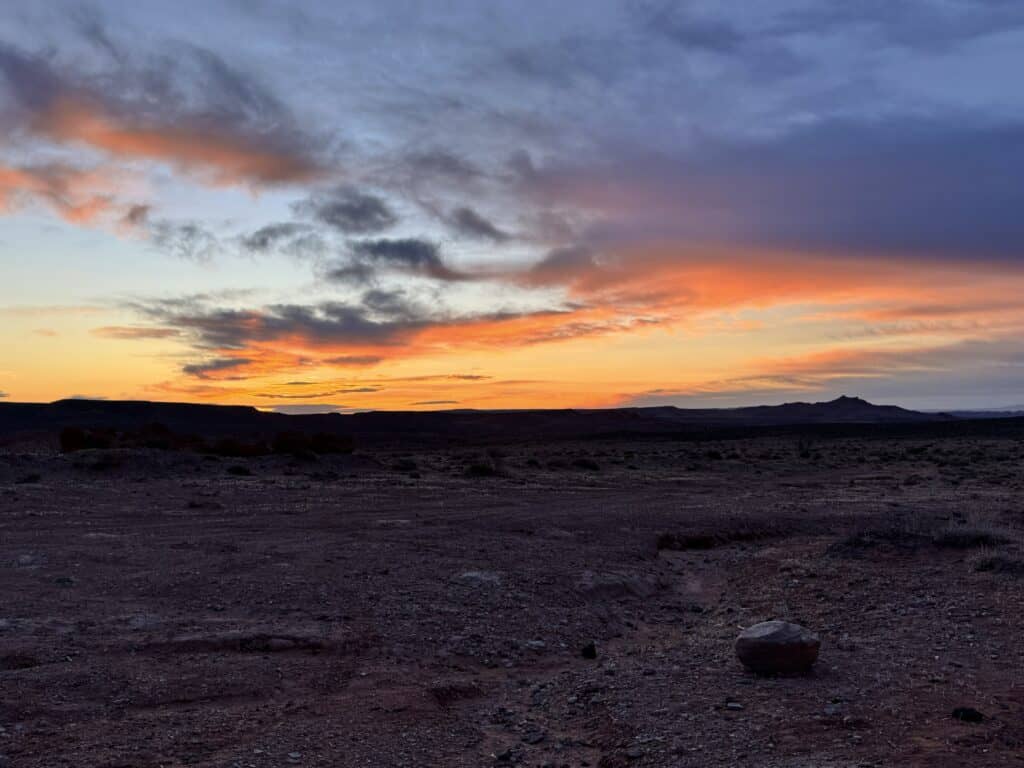
    Desert sunset over the red rock landscape near Moab, Utah, where seven fathers gathered around a campfire to talk about what matters most.

    A few weeks ago, I was in Moab for a beta run of one of our PathForgeXP retreats. Seven men sat around a campfire after a long day in the desert, and I have been thinking about what I learned ever since.

    For the drive down to Moab, I gave them a few prompts about their experience as children. The behaviors they learned from their fathers and the things they wish they could do differently now that they have children.

    As they started opening up, the conversation quickly turned into something valuable, vulnerable, and real. The weight of fatherhood and the strain of marriage. About the disorientation of leading in a world constantly on the move. Every one of them was successful by any external measure. Careers, families, responsibilities — they had built the lives they were supposed to build. And yet, sitting under a canopy of brilliant constellations contrasted against a dark sky, with the fire between them, what came out was not arrogance or pride. It was confusion. Somewhere along the way, they become lost. Not geographically. Not professionally. But in the deeper sense. The kind of lost where you look at your own life and realize you’re not sure you recognize the person in the mirror.

    The Thing Beneath the Thing

    That night I listened more than I talked. What I heard, underneath the specific stories and frustrations, was a pattern. These men had lost contact with their values. They had stopped focusing on what truly mattered. It wasn’t intentional. But in the pursuit of a degree, a career, a family, of all the things, they forgot what was most important. They still cared, deeply, about their relationships, showing up as a husband and father, and building a meaningful life, but they had also lost the connection to who they were deep down.

    The Foundation Nobody Talks About

    Before you can build a life around your values, you need to have an unconditional love for yourself. And I don’t mean that in a bumper sticker or self-help platitude kind of way. It has to be structural — a foundation, if you will — that is able to bear the weight of the problems this world throws at you.

    We’re flawed. We have weaknesses. And, we are the only ones that see inside our heads. Only we know who we truly are. Sometimes that scares us. But there’s a softer side that we often forget. We need to learn to accept ourselves unconditionally, flaws and all. It’s what makes us human and it’s part of our experience.

    Without that acceptance, everything we build on top becomes unsteady. Our values aren’t really our own. They’re borrowed from whoever we’re trying to impress. Our relationships aren’t genuine. They become transactional — we’re looking to get something out of them that we haven’t figured out how to give ourselves. Validation. Reassurance. Proof that we’re enough.

    What This Looks Like at the Kitchen Table

    Here’s where it gets practical. Your daughter comes home with an F on her report card (I know what that’s like). If you haven’t settled the question of your own worth, that F becomes about you. It’s a reflection of your parenting. Your failure. And, your response, whether it’s anger or a lecture about responsibility, is really about managing your own discomfort, not helping your child.

    But if you have that foundation, the F only matters in relation to how your daughter is actually doing. You’re more concerned with her performance and her life than with what her grades say about you. You get curious instead of reactive. You ask better questions. You sit with her instead of standing over her.

    One response is about you. The other is about her. And, our kids can feel the difference, even when they can’t name it.

    The Transactional Trap

    This is what I saw around the campfire, even though none of those men used the word. They had built meaningful relationships — with their wives, their kids, their colleagues — that had quietly become transactional. Not because they were selfish (none of them were). Because they were running on empty in a place they hadn’t learned to fill for themselves.

    Think about it. When we don’t love ourselves, we need our spouse to make us feel valued. We need our kids to make us feel competent. We need our teams to make us feel important. And, those needs, unspoken and often unrecognized, shape every interaction. They turn love into a ledger. They turn fatherhood into a performance review.

    The people around us carry the weight of it without fully understanding why things feel heavy. A wife senses that affection has conditions. Kids sense that approval is tied to their achievements. Nobody says it out loud. But everyone adjusts around it. Everyone feels it.

    What the Fire Revealed

    That night, underneath all the talk about values, identity, and purpose, those seven men were saying something they’d never said out loud: they still hadn’t settled the question of whether they were enough. Not just as husbands or fathers or leaders, but as men trying to live a real, honest life on this incredible planet.

    I understand that because I’ve been there. I’ve been the father who took his kid’s struggles personally — not because I cared so deeply about her in that moment, but because I hadn’t separated her story from mine. That’s hard to admit. But it’s also where the real work starts.

    And, this isn’t something we fix once. It’s more like a practice. A returning, over and over, to the question of whether we can sit with who we are without reaching for something to make it feel like more.

    The Order of Things

    Most of us try to start with values. We make lists. We set intentions. And, we declare what we stand for. And, that’s not wrong. But if the man standing behind those declarations doesn’t believe he’s worthy of living them, then the values become another performance. Another way to earn approval. Another transaction disguised as conviction.

    Self-love has to come first. Not the loud, public kind. The quiet kind. The kind where we stop needing our daughter’s report card to say something about us. The kind where we can sit with our own failures without spiraling. The kind where our worth is not up for negotiation in every conversation, every meeting, every interaction at the dinner table.

    From that foundation, values become real. They stop being aspirational. They’re just true. And, the people in our lives stop being mirrors for our insecurity and become people we actually see.

    The Invitation

    If you’re a man who has done the work of building a life — career, family, responsibilities — and something still feels off, the missing piece might not be another goal or another strategy.

    It might be the question you’ve been carrying since long before the career started. The one that doesn’t have anything to do with what you’ve accomplished or who depends on you.

    Do you love the man you are when no one is watching and nothing is at stake?

    That’s where the values start. That’s where the relationships become real. And, that’s where the work of intentional fatherhood actually begins.

    Hi, I’m John!

    I’m a father, leader, outdoorsman, and the founder of PathForgeXP. I grew up in Moab, Utah, and I spend most of my time helping fathers reconnect with what matters through wilderness retreats and intentional living. I don’t have this figured out. I’m just a man on the trail, writing about what I’m learning along the way. 
    John Bishoff, founder of PathForgeXP, hiking through the red rock landscape near Moab, Utah.
  • The Man Who Had Nothing Was Home by 4.

    A coastal town in Mexico at golden hour — a reminder of what being present for your family can look like

    Something We Don’t Have

    The other day, my friend sat across from me and said something I have not been able to stop thinking about. He had just returned from Mexico, not a resort, but the actual country, and he was still processing what he saw. He watched men who had very little by any American standard work through the morning, eat lunch with their families in the afternoon, and sit outside in the evening with nowhere else to be. No second income to chase or performance reviews looming. No optimization. Just a life, lived at a human pace, with the people they loved most within arm’s reach. Their days were really about being present for family. He looked at me and said, “I think they have something we don’t.”

    He is not a naive man. Poverty is not romantic, and he knows that. He knows a week in another country is not enough time to understand how anyone actually lives. But I think he was pointing at something true, something most of us sense but rarely say out loud. We have built lives of extraordinary complexity and comfort, and somewhere inside all of that, we lost something simpler and harder to name.

    The Plan That Never Arrives

    The thesis of American ambition goes something like this: work hard now so that you can live well later. Sacrifice the present for the future. Delay gratification. Build the career, accumulate the resources, secure the foundation, and then, when the conditions are right, show up fully for the people who matter most. It is a reasonable plan. It is also, for a lot of men I know, a plan that never quite arrives at its second half. The conditions are never quite right. The foundation never quite feels secure enough. The career always has one more thing to ask of you before you can afford to exhale.

    The Quiet Waiting

    And so the family waits. Not dramatically. Not with ultimatums or confrontations. They just wait quietly while you finish one more thing, take one more call, check one more time before bed. And the waiting becomes the texture of daily life, so familiar that nobody names it anymore. It is just how things are.

    The Difference is Not Subtle

    None of this comes from a place of having figured it out. I have sat at my own desk finishing one more thing while my kids moved through the house without me. I know what it feels like to be physically present and somewhere else entirely. And, I also know what it feels like to be in the wilderness with my children, with no signal and nowhere to be, and to watch something open up between us that the regular rhythm of life had quietly closed. The difference is not subtle. It is the difference between a relationship and the memory of one.

    The Thread

    What my friend saw in Mexico was not a better economic system or a model worth replicating. What he saw was men who had not lost the thread between their work and their life. The work ended. The life began. There was no performance of busyness, no status attached to exhaustion, no cultural pressure to sacrifice presence as proof of ambition. The day had a shape, and the shape made room for what mattered.

    That is what this newsletter is about. No productivity hacks. Not a better morning routine. Not ten things successful fathers do before sunrise. It is about the thread. The one that connects who you are at work to who you are at home, the one that gets harder to find the longer you ignore it, the one your kids are quietly measuring whether you still hold.

    You already know what matters. That is not the problem. The problem is that everything around you is designed to make you act like you don’t. This is a letter for men who are ready to stop letting that happen.

  • The Stream That Never Questioned Itself

    On invisible wor, sandstone patience, and learning to trust the current.


    I’ve crossed this stream a hundred times. Maybe more. It runs through a stretch of desert I know well, close enough to home that I don’t think of it as a destination. It’s just part of the walk. Background noise. The kind of thing you step over on your way to somewhere else.

    Last week, for whatever reason, I stopped.

    I don’t know what made me look down. Maybe I was tired. Maybe I’d been carrying something heavier than usual and the weight of it slowed my pace enough to notice what had always been there. But I looked, and what I saw stopped me.

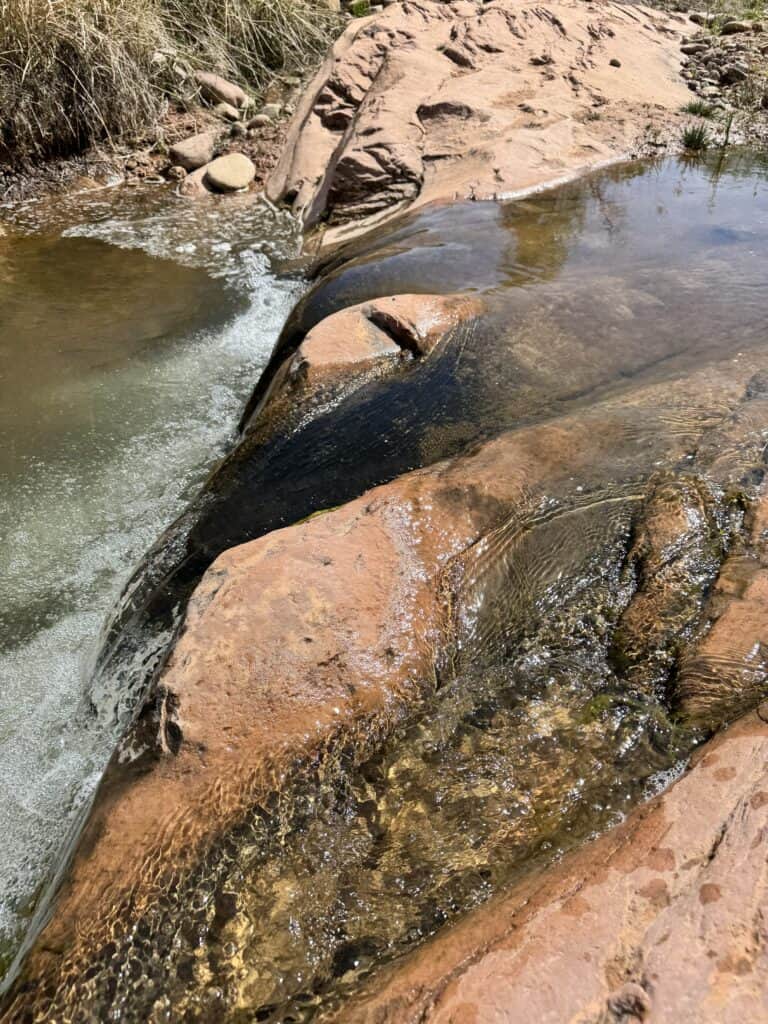
    The sandstone underneath the water was carved smooth. Inches deep. Grooves worn into rock so precisely they looked intentional, like someone had taken a chisel and traced a pattern with careful hands. The edges of the channels were rounded and polished. The surface of the stone had a texture that only comes from time and repetition, not from force.

    This wasn’t the work of a huge river. There was no dramatic current, no whitewater, no evidence of a single catastrophic flood that reshaped the landscape in one afternoon. This was a small stream. Quiet. Barely ankle-deep in most places. The kind of water most people wouldn’t even pause to photograph.

    And it had carved stone.

    The Invisible Work

    I stood there longer than I expected. Something about it wouldn’t let me go.

    I’ve been where that stream is. Not geographically. Emotionally. Professionally. In the kind of deep, interior place where you ask honest questions about whether any of it is working. Where the effort you’re pouring into something doesn’t seem to match the progress. Where you look around at other people and their visible results and wonder if you’re fooling yourself.

    There are seasons in a man’s life when the work feels invisible. You’re showing up. You’re doing the reps. You’re having the hard conversations, staying disciplined when nobody is watching, putting in hours that don’t come with applause or metrics or a quarterly review to tell you you’re on track. And the gap between effort and evidence starts to feel unbearable.

    This is the place where most of us make our worst decisions. Not because we lack skill or intelligence, but because we lose patience with the process. We start to believe the lie that if progress isn’t visible, it isn’t real.

    The stream never questioned whether it was making a difference. Never compared its groove to someone else’s canyon. Never took a week off to rethink its strategy. It just kept flowing.

    That’s what I saw in that sandstone. Not a motivational metaphor. Not a bumper sticker about persistence. I saw the actual, physical evidence of what consistency looks like when you extend the timeline far enough. And I realized I had been walking past that evidence for years.

    The Mythology of the Breakthrough

    We live in a culture that worships the breakthrough moment. The overnight success. The viral post, the big deal, the promotion that changes everything. And because we worship it, we’ve built an unspoken belief system around it: that meaningful change happens suddenly. That if you’re doing it right, you’ll feel the shift.

    But most of the important things in life don’t happen that way.

    A marriage doesn’t become strong because of one grand gesture. It becomes strong because two people kept choosing each other through ten thousand ordinary mornings. A child doesn’t trust you because you took them on one epic trip. They trust you because you were present at breakfast, consistent at bedtime, steady when things got hard, and honest when you didn’t have answers.

    The same is true in work. In health. In faith. And in any area where the results are built, not bought.

    The problem is that the quiet days don’t feel like progress. They feel like repetition. And repetition, if you’re not careful, starts to feel like futility. That’s the moment where we begin to question the current. We pull up the map and wonder if we’re on the right path. And, we compare our little stream to somebody else’s river. We start looking for a shortcut, a bigger channel, a faster route to the kind of results that would finally make the effort feel justified.

    And that’s often the moment we quit. Right about the time the rock starts to soften.

    What the Stream Knows

    Here’s what struck me as I stood over that water last week. The stream didn’t carve stone by trying harder. It didn’t find a more efficient angle or attend a conference on erosion strategy.

    It just kept showing up. Day after day. Year after year. Decade after decade. Not with force, but with faithfulness.

    There’s a difference between those two things, and I think it matters.

    Force is what we default to when we’re anxious about results. We push harder. Work longer. Add more volume, more intensity, more hustle. Force is driven by the fear that what we’re doing isn’t enough, so we compensate with effort.

    Faithfulness is something else. Faithfulness is steady. It trusts the direction without needing constant proof that it’s working. It’s willing to be small. Willing to be unnoticed. Willing to stay in the same channel when everything in the culture is telling you to chase a bigger one.

    The stream that carved the sandstone in my backyard wasn’t powerful. It was faithful. And over time, faithfulness did what force never could. It reshaped something permanent.

    The Work Nobody Sees

    I think about this constantly now. Not just in my own life, but in the lives of the men I work with.

    I talk to fathers who are doing real, unglamorous work. Men who are choosing presence over performance. Who are having awkward conversations with their teenagers instead of retreating into their phones. Who are rebuilding trust with their families one kept promise at a time, knowing that the evidence of change won’t show up for months. Maybe years.

    That work doesn’t get a standing ovation. There is no leaderboard for it. Nobody posts about the Tuesday night when you sat at the kitchen table and listened to your daughter talk about something that didn’t interest you at all, and you stayed anyway. Nobody celebrates the morning you woke up early to be present before the chaos started, not because anyone noticed, but because you decided that’s who you want to be.

    This is the invisible work. And it is the most important work there is.

    Because the people in your life don’t experience your effort as a single grand gesture. They experience it as a current. A steady, small, reliable flow of attention and care that, over time, shapes everything it touches. They might not notice it on any given Tuesday. But they will notice what it built.

    Learning to Trust the Current

    I’m learning something, and I want to be honest about the fact that I’m still in the middle of it. I haven’t arrived. I don’t have this figured out.

    I’m learning to trust the current.

    That means letting go of the need to see results on my timeline. It means staying faithful to the work even when the sandstone looks exactly the same as it did yesterday. It means resisting the urge to compare my stream to someone else’s river and concluding that I must be doing something wrong.

    And, it means paying attention. Because the evidence is often there. I was walking past it for years. The grooves in the rock were always beneath my feet. I just never slowed down enough to see them.

    That’s maybe the most important part of this. The stream didn’t need me to validate its work. It had already carved the stone. My noticing didn’t make it real. It was real the whole time. But my noticing changed something in me. It gave me a reference point for the days when the effort feels invisible and the progress feels nonexistent.

    Now, when I cross that stream, I look down. I let myself see what patience built. And I remember that the work I can’t see yet is still working.

    An Invitation

    If you’re in a season where the work feels invisible, I want to ask you something. Not as a challenge. As an honest question from someone who has stood in that exact spot.

    What’s the work you’ve been doing that nobody sees yet?

    The conversations you keep having. The discipline you keep choosing. The presence you keep offering even when it doesn’t seem to register. The promises you keep, quietly, without fanfare.

    That’s not futility. That’s a current.

    And currents, given enough time, reshape stone.

    For more information on what we do at PathForgeXP, click here.

  • A Father’s Competitive Edge

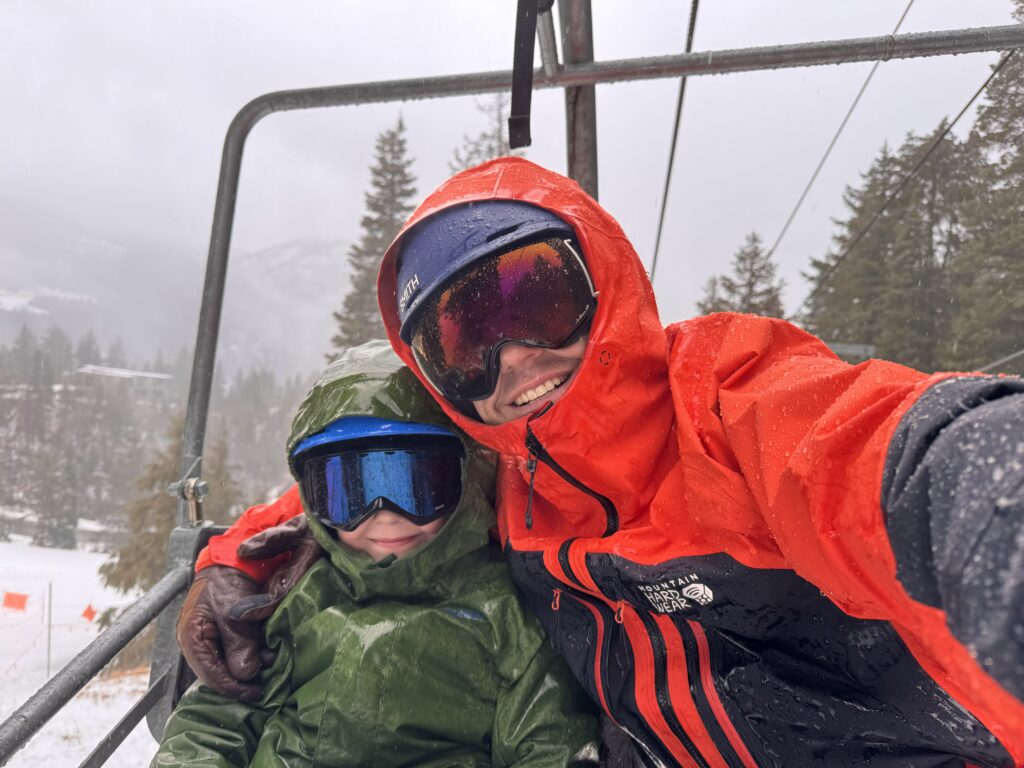
    A father and son ride a ski lift together, sharing time outdoors and building connection through a powerful winter experience.

    The Old Story of Strength

    Most fathers assume their competitive edge comes from the same places the world rewards: strength, productivity, discipline, and the ability to push through discomfort without flinching. I believed that for a long time. It’s what I was taught and what I tried to live up to.

    What I See in Men When the Armor Comes Off

    But the longer I do this work, walking with men through the desert and watching them take off the armor they’ve carried for years, the more convinced I become that the real advantage fathers need today is something far less obvious and far more powerful.

    A father’s competitive edge is his ability to stay emotionally open, adaptive, and fully alive in the moments that matter.

    This isn’t softness. It’s strategy.

    Adaptability: The Real Advantage

    David Teece’s work on dynamic capabilities helped me see this more clearly. He argues that organizations thrive in turbulent environments not because they are the strongest, but because they are the most adaptable. They sense change, seize opportunity, and adjust as the world shifts around them.

    Fatherhood feels a lot like that.

    Kids grow. Work pulls. Stress shows up without warning. Our identities evolve whether we want them to or not. The ground is always moving.

    The fathers who thrive are not the ones who white‑knuckle their way through it. They are the ones who can shift emotionally, mentally, and relationally in real time. They can move from frustration to curiosity, from control to connection, from rigidity to responsiveness.

    Adaptability becomes the father’s strategic advantage.

    The Emotional Engine Behind Adaptability

    Barbara Fredrickson’s broaden and build theory explains the fuel behind that adaptability. Positive emotions like joy, interest, awe, pride, and love widen our perceptual field. They expand our thinking, increase creativity, undo the effects of stress, and build long‑term psychological resources.

    Positive emotion isn’t a reward for good fathering.
    It’s the engine that powers it.

    Why Experience Matters More Than Intention

    Put these ideas together and something important emerges. A father’s emotional openness is not a luxury. It is a capability. Positive emotions broaden his ability to adapt, and that adaptability is what allows him to show up as the father his children need. Not just once, but again and again as their lives change.

    But here is the part most men miss. Positive emotions don’t show up on command. You can’t think your way into awe or schedule joy. You can’t grit your way into connection.

    These states are built through real, embodied, meaningful experiences.

    Awe comes from standing at the edge of a canyon at sunrise, not from reading about it.
    Joy comes from laughing with your kid as you both try and fail to catch a fish on a fly.
    Connection comes from shared struggle, shared silence, and shared adventure.

    Experiences are the doorway.
    Positive emotions are the expansion.
    Adaptability is the outcome.

    The Upward Spiral That Strengthens a Family

    Fredrickson describes something called an upward spiral. Positive emotions create more positive emotions over time. In fatherhood, it looks like this: a moment of awe leads to deeper presence, presence leads to better connection, connection leads to more meaningful experiences, and meaningful experiences generate more positive emotion.

    Each loop builds capability.
    That capability strengthens the father.
    And, each strengthening enriches the family.

    Becoming a More Alive Man

    This is how a father builds a richer life. Not by adding more tasks or optimizing his schedule, but by expanding his emotional range through intentional experience.

    When a father steps into real experience through challenge, play, adventure, or awe, he becomes more than a provider or protector. He becomes more flexible, more creative, more patient, more connected, and more alive.

    And his children feel the difference. They don’t just see a father who shows up. They see a father who is present, engaged, and emotionally available. A father who can adapt to them as they grow.

    That is the competitive edge.
    That is the advantage that compounds over a lifetime.

    Where a Father Should Begin

    If a father wants to become more capable, he shouldn’t start with discipline. He should start with experience. He should put himself in places that wake him up, seek moments that stretch him, and choose environments that widen his perspective.

    Let awe do its work.
    Allow joy to loosen what is tight.
    Let connection rebuild what is frayed.

    Because the father who experiences more doesn’t just raise stronger kids. He becomes a stronger man.

    References:

    Fredrickson, B. L. (2001). The role of positive emotions in positive psychology: The broaden-and-build theory of positive emotions. American psychologist56(3), 218.

    Teece, D. J., Pisano, G., & Shuen, A. (1997). Dynamic capabilities and strategic management. Strategic management journal18(7), 509-533.

    Common questions

    What is a father’s real competitive edge?

    Not strength, productivity, or the ability to push through discomfort, the things the world rewards. A father’s real edge is presence, emotional steadiness, and the willingness to be truly known by his family. The traits that look soft are the ones that compound over a lifetime.

    Why isn’t toughness enough to be a good father?

    Toughness gets you through tasks, but fathering isn’t a task to power through. Kids don’t remember how hard you worked; they remember whether you were there and whether they felt safe with you. Relentless strength without presence leaves the people closest to you on the outside.

    How do you redefine strength as a father?

    Move the definition from output to presence. Real strength as a father is staying calm when things are hard, repairing after you get it wrong, and showing up on the ordinary days. It’s quieter than the world’s version, and it lasts a lot longer.

  • Building Confidence as a Father

    The Moment That Hit Me on the Bleachers

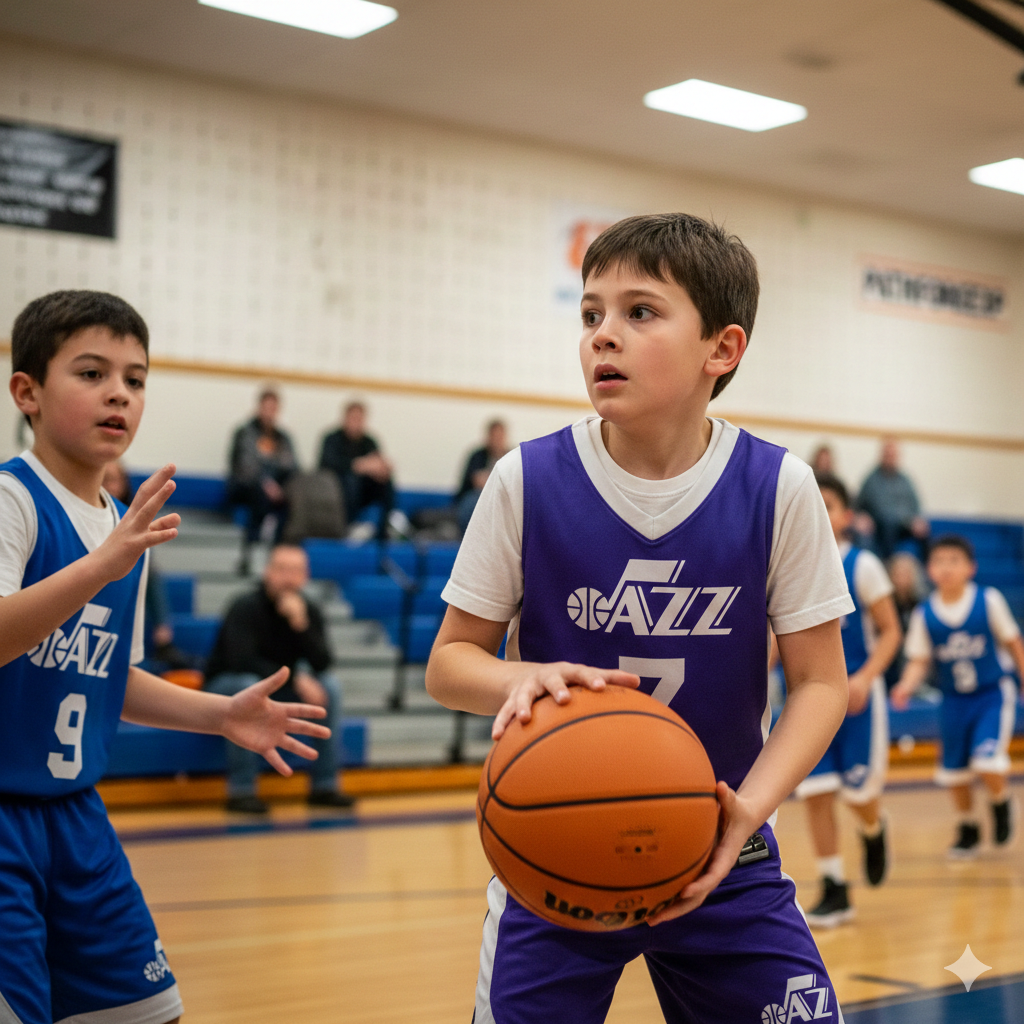
    I was at my son’s basketball game the other day, sitting on those hard plastic bleachers, watching a bunch of kids run up and down the court, and it struck me. Most of these kids have about the same skill level. What separated them was their confidence. In many ways, building confidence as a father can feel just as challenging.

    The confident kids got the ball more. They took more shots, and because they took more shots, they scored more points. They weren’t better – they just didn’t freeze. Similarly, building confidence as a father means learning how to stop hesitating and trust yourself.

    When Confidence Fades

    When my son first started playing at six, he had that confidence. He’d grab the ball, push through defenders, and try to score. No hesitation or second-guessing and he got the ball more.

    Fast forward a few years and something different happens. I watch him get the ball and he freezes. One dribble, maybe two, then he picks it up and worriedly looks around for the kid he thinks is “the best” and hands it off. And that kid, without hesitation, usually fires off a long shot that barely brushes the net and often ends in an airball.

    The Sting of Recognition

    Watching him, I felt this uncomfortable, familiar sting, because I know that feeling. Not on a court, per se, but in the way I show up at work, at home, and in my community. Quite often, building confidence as a father starts with recognizing how we react under pressure and owning our actions. How often have I frozen when I get the ball? I watch the people who show more confidence get the ball, not because they’re better, but because they trust in their abilities and take the shot – they’re unafraid of missing.  

    Our kids pick up on that. They can feel when we’re steady and when we’re not. They know when we’re leading and when we’re hoping to make a pass.

    The Questions That Changed Everything

    So, I’ve been asking myself:

    What am I doing to build my own confidence?
    And what are my kids learning from watching me?

    Why I Built PathForgeXP

    That’s really why I built PathForgeXP. Not to “fix” dads or to turn them into some chest‑thumping version of themselves. We’re helping men regain their confidence by putting them in situations that stretch them just enough to remember what they’re capable of. Authentic experiences. Real challenge. And, actual growth. Above all, building confidence as a father is at the center of what we do.

    It’s grounded in science and live experience. And, it works.

    The Father You Become Through Experience

    Through our fatherhood retreats, you’ll walk away with more confidence, more presence, and a clearer sense of who you are as a father. Not because someone told you, but because you lived it. Building confidence as a father takes real experience and support. If you’re stuck in a rut, feeling disconnected, or just tired of passing the ball to someone else, reach out. It might be time to take the shot again.

    Common questions

    How do you build confidence as a father?

    The same way confidence comes to a kid on a basketball court: by stopping the hesitation. You don’t wait to feel ready, you act, and the confidence follows the action. The fathers who second-guess every decision freeze; the ones who trust themselves, adjust, and keep showing up build real confidence over time.

    Why do fathers lose confidence over time?

    Most fathers start out instinctive and sure, then slowly begin second-guessing, afraid of getting it wrong and comparing themselves to everyone else. The hesitation itself is what erodes confidence, not a lack of ability.

    Does a father’s confidence affect his kids?

    Yes. Kids read their parent’s steadiness. A father who trusts himself gives his children a stable base to push off from, while an anxious, hesitant father passes that uncertainty down. Your confidence becomes part of their nervous system.