On legacy, intentional fatherhood, and the question the petroglyphs keep asking—what does it mean to be etched for a thousand years.
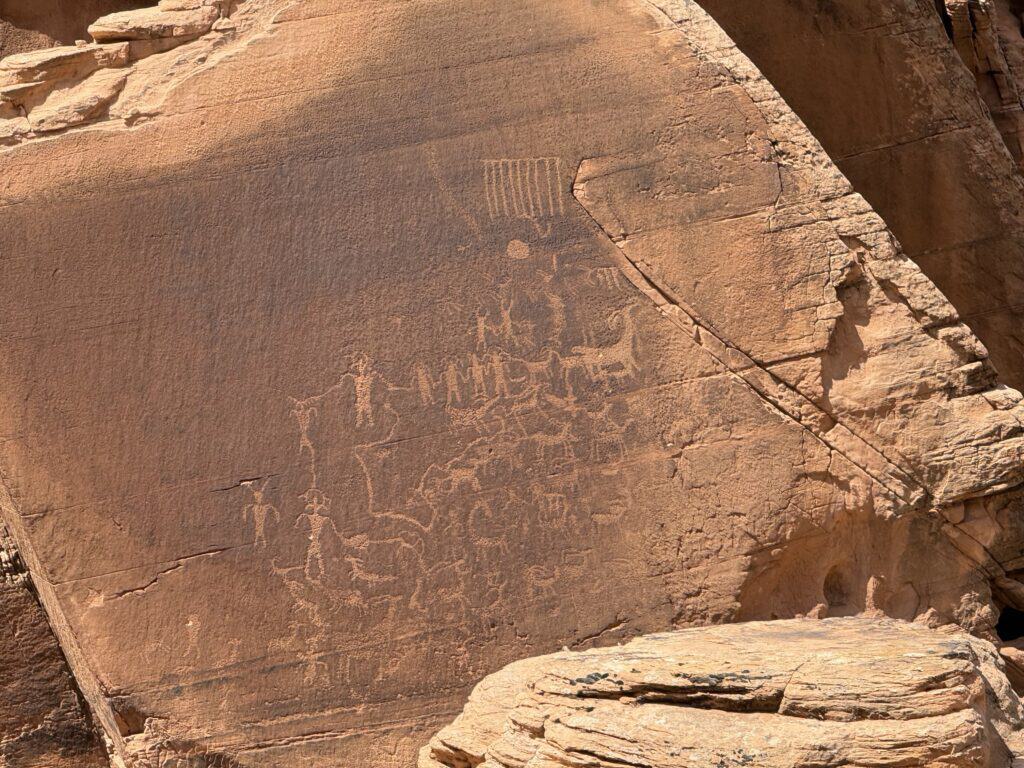
In the canyon behind my childhood home, there are petroglyphs. They have been there at least a thousand years. Figures pecked into black desert varnish, hands pressed against sandstone, the bent flute player called Kokopelli appearing again and again as if he had something important he needed to keep telling us.
In the canyon behind my childhood home, there are petroglyphs. They have been there at least a thousand years. Figures pecked into black desert varnish, hands pressed against sandstone, the bent flute player called Kokopelli appearing again and again as if he had something important he needed to keep telling us.
What the Stone Holds
A person standing at a sandstone wall with a hammerstone and a chisel is making a decision. The work is slow. Each line is an hour. One figure might take a day. Sandstone is patient but unforgiving. Once the mark is made, it’s made. There is no editing. There is no taking it back.
This is what makes petroglyphs different from almost everything else humans have ever made. Pottery breaks. Wood rots. Cloth disintegrates. Words spoken into the air are gone the second they’re spoken. But a figure carved into a canyon wall in 1100 AD is still there, still legible, and still asking the same questions.
The Monks on the Sidewalk
When I was young, a group of Tibetan monks came to Moab and made a sand mandala on the sidewalk near the school. I remember watching them lean over the work with small metal funnels, tapping out grains of colored sand into patterns of impossible precision. They worked for days. The mandala bloomed slowly into something beautiful, full of geometry, color, and meaning I did not understand.
When they finished, they swept it away.
Up the road from where they worked, in the canyons around town, the petroglyphs were still there. They had been there for a thousand years. They are there today.
I have thought about this contrast for most of my adult life without knowing why it stayed with me. I am finally beginning to understand. The monks were not careless. They were doing something the rest of us almost never do – being completely honest about what they were making. They knew the wind would come. The whole point was to dedicate time to something temporal, knowing it would not last. Which, interestingly, made the work more sacred, not less.
Most of us aren’t that honest. We are also working in sand. But, we don’t admit it.
What the Sand Holds
Most of what we spend our lives on is not being written in stone. It is being written in sand. And unlike the monks, we have convinced ourselves it is something else.
The quarterly numbers. The title on the business card. The car in the driveway. The house with the right zip code. The vacation that photographed well. The promotion. The bonus. The recognition at the company offsite. The new shoes, the new watch, the new something to replace the something that was new six months ago.
I am not saying these things are bad. Some of them can bring real joy. Some of them are the honest fruit of meaningful labor. I have wanted them too, and I have worked for them, and I have felt the small flare of satisfaction when they arrived. None of that is shameful. What is worth examining is the priority.
Because the tide comes in – always. The market shifts and the title goes away. The car gets traded. The house is sold. The promotion gets handed to someone else two years after you stopped being indispensable. The recognition fades within the time it takes to drive home from the event. These things are real, but they are written in a medium that does not last. They are tide-pool calligraphy. Beautiful at low tide, gone by sunset.
The work we tend to dedicate our lives to, which pulls us out of the house early and keeps us at the laptop after the kids are in bed, is almost without exception sand-work. And, if we’re honest with ourselves, we know it.
The Question No One Wants to Sit With
Someday, you will no longer be here. This is a hard sentence to read and it’s a hard sentence to write. But it is the sentence that gives everything else weight.
You will live your life and one day it will end. The people who knew you will tell stories about you for a generation, maybe two. After that, you will become a name on a headstone and a face in a photograph that someone’s grandchild does not quite recognize.
What story will you have etched into the stone?
Will the remnant be that you were always angry? That you were never satisfied? That you worked very hard but missed the point because you were never at home? Or will the remnant be the small unphotographed things that actually shape a child: the breakfasts, the bedtime conversations, the willingness to put the phone down, the laugh at the dinner table, the time you said the thing your kid needed to hear when they didn’t even know they needed to hear it?
The petroglyphs in southeastern Utah will still be there in another thousand years. Long after the company we built has been forgotten. Long after we have relinquished our cherished job title to someone else. The desert does not care about org charts.
So the question is not whether you will leave something behind – you will. The question is what will you leave behind.
My Grandmother’s Headstone
My grandmother wrote a song for my grandfather called “The Land I Love.” When she died, the family had the song etched onto her headstone. I have stood there and read it, and the strange thing about that piece of granite is that it does not list a single thing she accomplished. It does not say what she did for a living. Nor does it mention any title she held or any sum of money she earned or any house she owned.
It says she loved a man, and she loved a place, and she wrote a song about both.
That is what was worth putting in stone.
I think about her headstone often. I think about it when I am tempted to spend a Saturday morning answering email instead of making pancakes. Or, when I am about to say yes to a meeting that I should decline. I think about it when one of my kids asks me a question and I have to decide, in the space of about two seconds, whether to actually look up from my seemingly important task or to respond casually, focused on the important work at hand. Those small decisions are the chisel. Each one adds a line.
We are all etching, but the question is, what are we etching.
What They Both Knew
The people who made those petroglyphs and the monks who swept the mandala across the sidewalk were doing different things. One group was trying to leave something that would last. The other was practicing the deliberate release of something they knew would not. But they had one thing in common, and it is the thing that separates them from most of us.
They were honest about the medium they were working in.
The carvers knew sandstone was permanent and they treated it with the seriousness that permanence requires. The monks knew sand was impermanent and they treated it with the seriousness that impermanence requires. Both groups looked at what was in front of them and refused to lie about what it was.
Most of us spend our lives not being completely honest about the medium we are working in. We treat the urgent email like it is being carved in stone, yet we treat the time at the kitchen table like it is sand. We have the two reversed, and we know we have them reversed, and we keep doing it anyway because the reversal is what rewards in the short-term.
A thousand years from now, when our posterity is walking through our canyons, I hope they find something carved in stone. Not literally. Not on a wall in a desert. But in the people we raised. In the relationships we tended. In the way we showed up at the small unphotographed kitchen tables that turn out, in the end, to be the only thing that mattered.
The titles will be gone. The money will be gone. The things will be gone.
The stone will remain. And the only question is what you put on it.
Hi, I’m John!
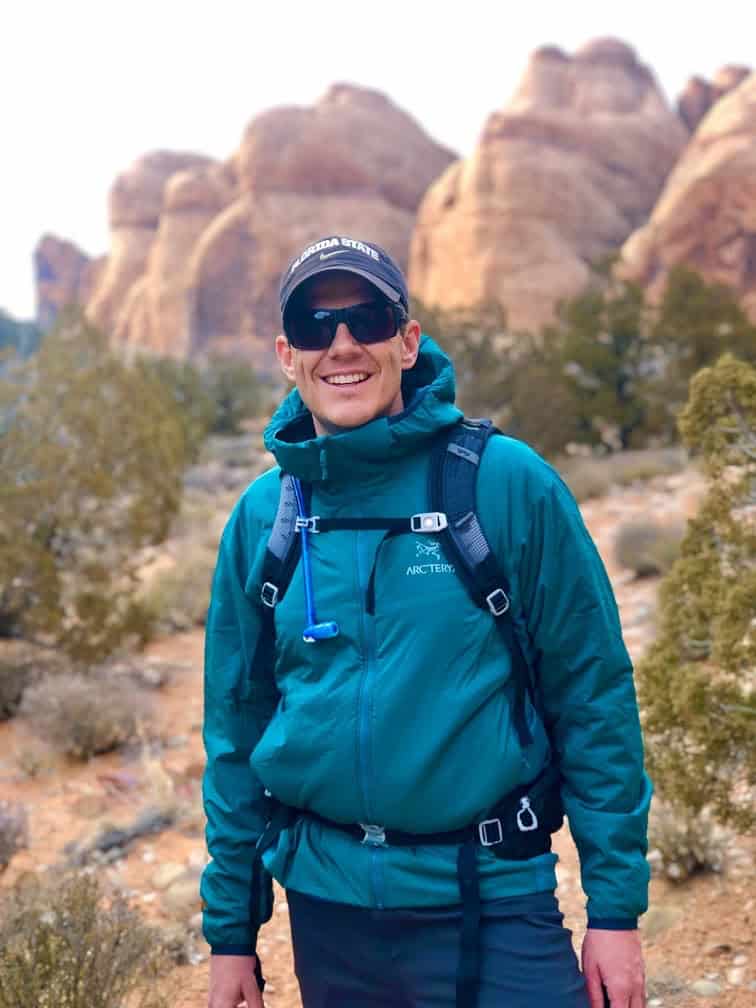
I’m a father, leader, outdoorsman, and the founder of PathForgeXP. I grew up in Moab, Utah, and I spend most of my time helping fathers reconnect with what matters through wilderness retreats and intentional living. I don’t have this figured out. I’m just a man on the trail, writing about what I’m learning along the way.
Leave a Reply