Category: Legacy

On what we leave behind, and to whom. Reflections on the relationships, rituals, and stories that outlast everything we manage to accumulate.

  • The Things They Left Me

    What three grandparents taught me about what actually lasts.
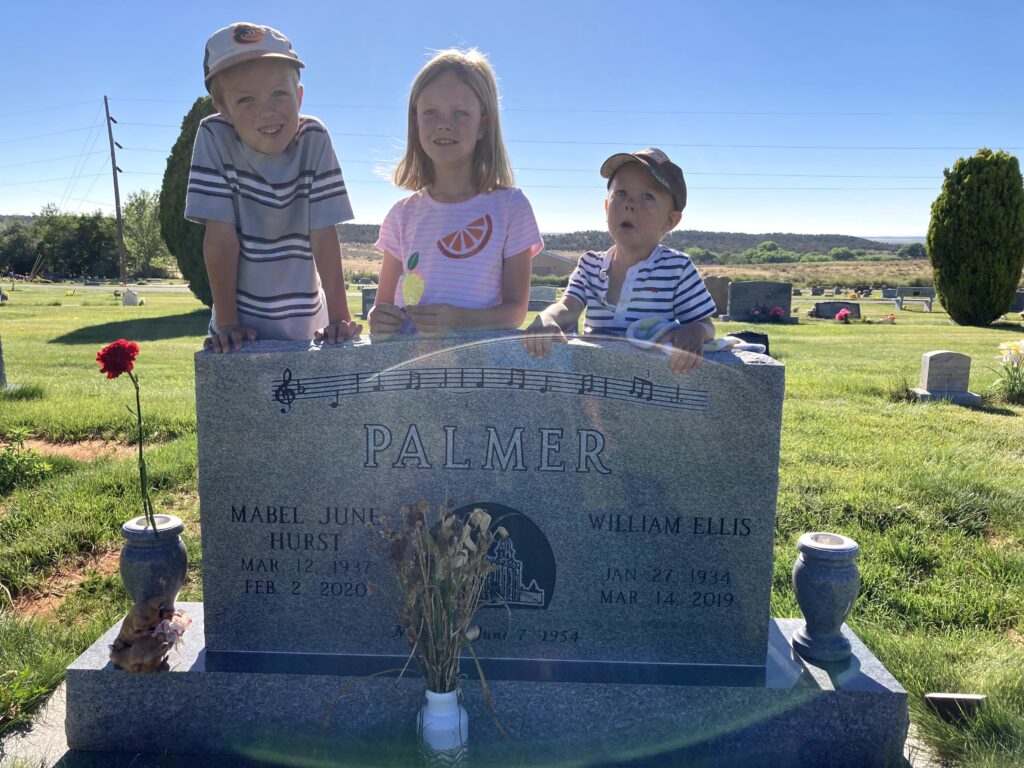
    Three young children stand smiling behind a granite headstone in the Blanding, Utah cemetery. The stone reads PALMER and bears the names of Mabel June Hurst Palmer (1937-2020) and William Ellis Palmer (1934-2019), with a hand-engraved musical staff and notes carved across the top, the melody of "The Land I Love." Open grassland and juniper hills stretch behind them.

    Happy Friday. Memorial Day weekend is here, and I want to spend a few minutes with some of the people in my life who have passed on to the other side.

    Three of my four grandparents are gone now. My paternal grandfather is still alive, and I’ll see him Sunday afternoon when we celebrate my dad’s birthday. But before I tell you about each of them, here’s what I keep circling back to: the impact we leave on the people we love is the greatest thing we leave behind. The things we own, the hours we pour into work, the effort we spend accumulating, all of it disappears the moment we pass on. None of it comes with us. It’s cliché, and it’s also true. The only thing of real value we carry forward is the relationships we’ve built. And we build those through experiences. The more time we spend with people, the more we love them, the more we see them as they actually are. The more we learn to love ourselves, the more we can show up for the people who need us.

    Core and Balance

    The research on this is clear. There are two kinds of family activities, and high-functioning families need both. Core activities are unplanned, consistent, often inexpensive, sometimes spontaneous. They build stability and closeness. Balance activities are the planned ones, the novel and thought-out experiences that usually cost more and stretch a family in new directions. They build adaptability. Every family fills these categories differently. We love to ski, so we ski every Saturday in the winter, and sometimes on a random Wednesday when nothing else is going on. That’s core. A beach vacation to Florida, with the plane tickets and hotel rooms and restaurant meals, that’s balance.

    A family in Florida might flip it entirely. They go to the beach the way we go skiing, and they ski the way we vacation. The category never mattered. What matters is that we keep spending time on the people we love most, because when everything else falls away, that time is the only thing that stays.

    I’ve been thinking about that all week, because when I look at what my grandparents actually left me, none of it was a thing. It was time, pressed into something I could hold.

    The Land She Loved

    Mabel and William Ellis Palmer, the writer's maternal grandparents, sit together against a wood-paneled wall of John Bishoff's childhood home in Moab, Utah. She wears a lavender shirt and floral skirt; he wears a white short-sleeved shirt and a striped tie. A tabby cat is curled on a shelf behind them.

    My Grandma Palmer was deeply musical and loved a good adventure. One song in particular, “The Land I Love,” she wrote about the country in southeast Utah. The red rocks. The ponderosa and pinyon pines. The sagebrush. Every time I’m back home, the land sings it back to me.

    She also spent the last forty years of her life on crutches. Her bones were brittle and she was almost always in pain, through more surgeries than I can count. I don’t remember her complaining. What I remember is how completely she focused on her grandkids. Her body was failing, and she chose, over and over, to spend what little she had on us. That is a core activity in the truest sense. Unplanned, consistent, costing nothing but the only thing that matters.

    The Voice and the Ranch

    Her husband had a voice people compared to Frank Sinatra. Better, even, though I’ll admit I’m biased. Grandma wrote “The Land I Love” for that voice, and when he sang and she played, it was close to magic.

    He loved his ranch in Verdure. As a kid I’d spend my evenings with him while he told stories about being eight years old and alone out there, with nothing but his horse Tiny and his gun. He taught me to love wild country. He loved a good horse ride, and when he got too old to ride, we took drives in his truck around Blanding instead. The horse became a truck. The thing underneath never changed. He wanted to be on the land, and he wanted me next to him. That’s the experience he handed down, and I’ve been chasing it on slickrock and in cold streams ever since.

    The Bike
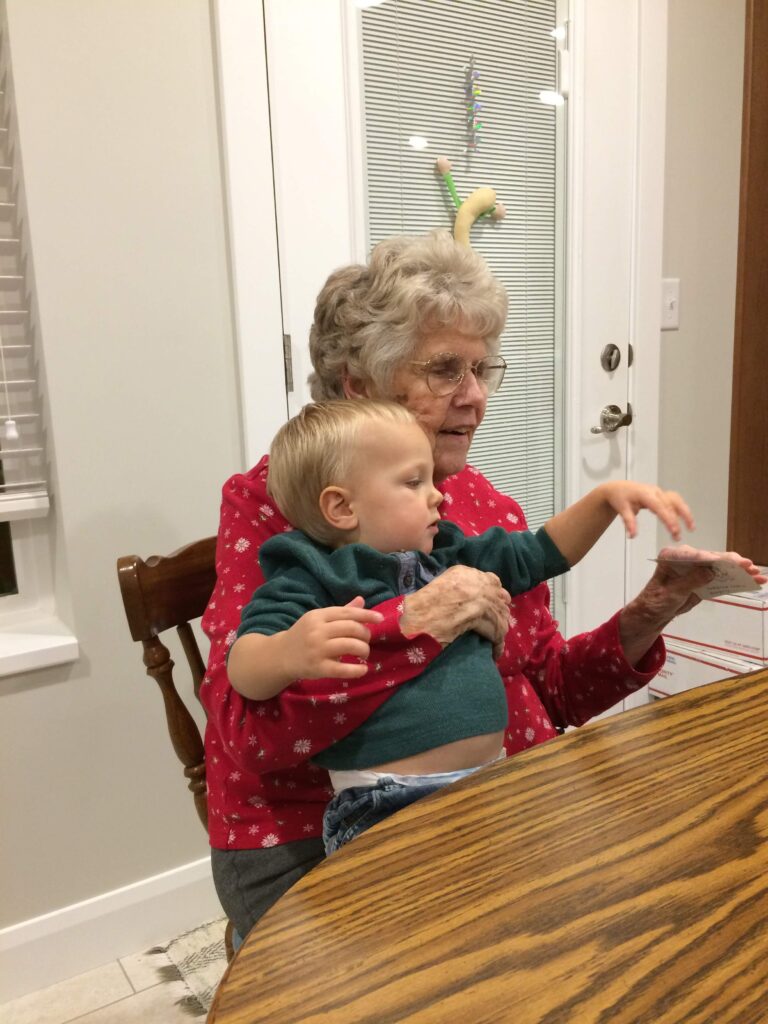
    The writer's paternal grandmother, white-haired and wearing glasses and a red snowflake-print sweater, sits at her kitchen table holding her young grandson on her lap. The toddler, in a green sweater, reaches toward something they're looking at together. An ordinary afternoon, the kind the essay is built around.

    My paternal grandmother died last year. She was at every one of my games. When we played away and my parents couldn’t make it, she and my grandpa were the ones in the stands. She loved a good table game, and we spent hours on Phase 10, Farkle, and dominoes. Pure core activity. Nothing planned, nothing expensive, just presence on repeat until the repetition itself became the relationship.

    Before she passed, she gave us her childhood bike. Her father had given it to her when she was about ten, and he died the year after. That bike was her last memory of him, and she carried it for a lifetime. So when it came to me, it came with all of that weight. A man I never met loved his daughter enough to give her a bike, and eighty years later I’m holding the proof. He’s gone. The bike remains. The love rode it all the way down to me.

    What Actually Gets Passed Down

    Not one of them left me an inheritance in the way we usually mean the word. They left me a song the desert still plays, a love of the land learned from the seat of a truck, and a bike that carries four generations of one family’s affection.

    In every case, what they left me was an experience that had become a relationship and then got handed forward. The core activities and the balance activities were never really about skiing or beaches or table games. Those were just the containers. What was being built, every Saturday and every Wednesday and every evening on the ranch, was the only thing any of us gets to keep.

    And that reframes the question I have to ask as a father. I have three kids, and I spend real energy worrying about what I’ll be able to provide for them. But my grandparents didn’t provide their way into my memory. They showed up their way into it. Grandma Palmer on her crutches, choosing her grandkids over her own pain. Grandpa in the truck because he couldn’t manage the horse anymore but still wanted me beside him. Grandma in the bleachers at the away game nobody else came to.

    The Honest Part

    I’m still learning this one. My kids are getting older, the teenage years are loud, and the temptation is to measure my fathering by what I can give them and where I can take them. The balance activities are easy to feel good about. They photograph well. They feel like effort.

    But I don’t think my kids will remember the trips the way I want to believe they will. I think they’ll remember the Saturdays. The ordinary, repeated, unremarkable presence that adds up to something they won’t be able to name until I’m the one who’s gone and they’re holding whatever I managed to hand them. I’d like it to be a bike. Or a song. Or just the memory of a dad who kept showing up on the random Wednesdays, when nothing was happening and there was nothing to capture, because that turned out to be the whole thing.

    So this Memorial Day, while we remember the people who’ve passed on, maybe the better question is about the people still here. The ones in your bleachers. The ones who’ll someday tell stories about your truck, your kitchen table, your random Wednesdays.

    What are you building right now that someone will carry after you’re gone? Are you spending your days on the things that come with you, or the things that don’t? And the person who will one day hold the proof of how you loved them, when did you last give them an ordinary afternoon?

    Hi, I’m John!

    I’m a father, leader, outdoorsman, and the founder of PathForgeXP. I grew up in Moab, Utah, and I spend most of my time helping fathers reconnect with what matters through wilderness retreats and intentional living. I don’t have this figured out. I’m just a man on the trail, writing about what I’m learning along the way. 
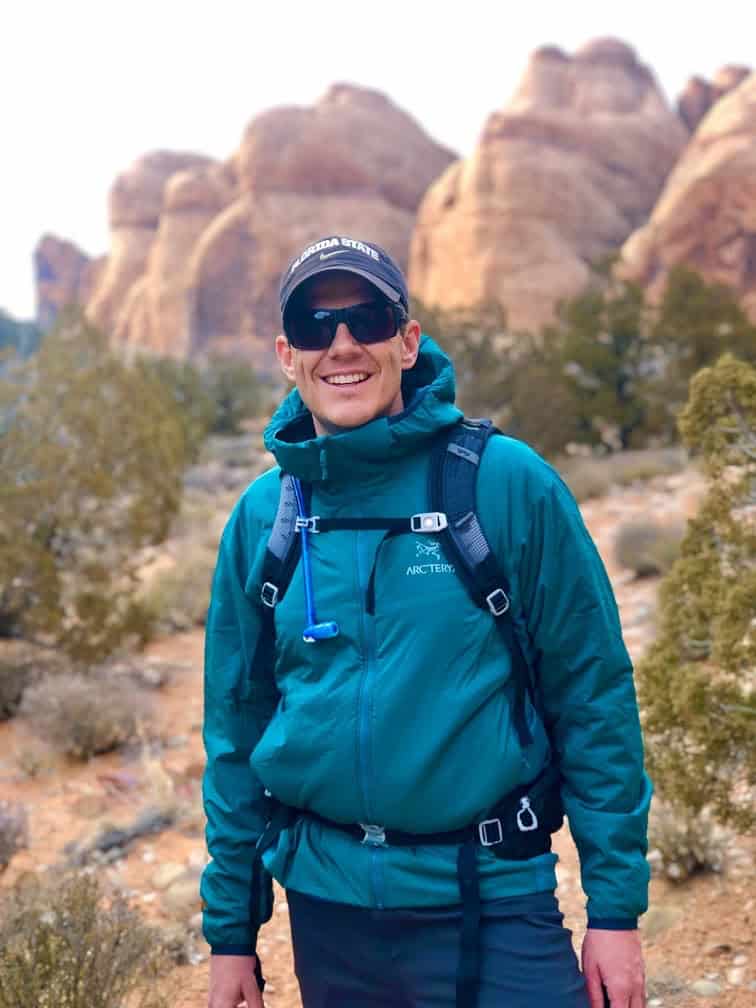

    John Bishoff, founder of PathForgeXP, hiking through the red rock landscape near Moab, Utah.

  • What Will Be Etched on Your Stone?

    On legacy, intentional fatherhood, and the question the petroglyphs keep asking—what does it mean to be etched for a thousand years.

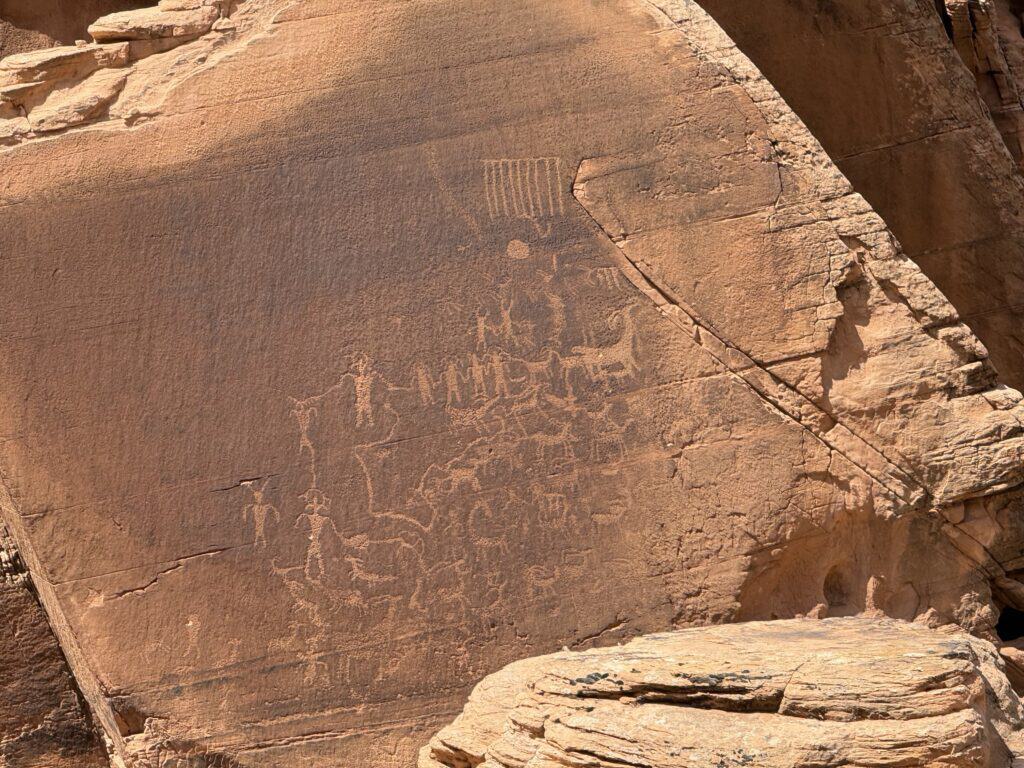
    Ancient petroglyphs pecked into a sunlit sandstone cliff in southeastern Utah, showing human figures, animals, and abstract markings on the desert rock face.

    In the canyon behind my childhood home, there are petroglyphs. They have been there at least a thousand years. Figures pecked into black desert varnish, hands pressed against sandstone, the bent flute player called Kokopelli appearing again and again as if he had something important he needed to keep telling us.

    In the canyon behind my childhood home, there are petroglyphs. They have been there at least a thousand years. Figures pecked into black desert varnish, hands pressed against sandstone, the bent flute player called Kokopelli appearing again and again as if he had something important he needed to keep telling us.

    What the Stone Holds

    A person standing at a sandstone wall with a hammerstone and a chisel is making a decision. The work is slow. Each line is an hour. One figure might take a day. Sandstone is patient but unforgiving. Once the mark is made, it’s made. There is no editing. There is no taking it back.

    This is what makes petroglyphs different from almost everything else humans have ever made. Pottery breaks. Wood rots. Cloth disintegrates. Words spoken into the air are gone the second they’re spoken. But a figure carved into a canyon wall in 1100 AD is still there, still legible, and still asking the same questions.

    The Monks on the Sidewalk

    When I was young, a group of Tibetan monks came to Moab and made a sand mandala on the sidewalk near the school. I remember watching them lean over the work with small metal funnels, tapping out grains of colored sand into patterns of impossible precision. They worked for days. The mandala bloomed slowly into something beautiful, full of geometry, color, and meaning I did not understand.

    When they finished, they swept it away.

    Up the road from where they worked, in the canyons around town, the petroglyphs were still there. They had been there for a thousand years. They are there today.

    I have thought about this contrast for most of my adult life without knowing why it stayed with me. I am finally beginning to understand. The monks were not careless. They were doing something the rest of us almost never do – being completely honest about what they were making. They knew the wind would come. The whole point was to dedicate time to something temporal, knowing it would not last.  Which, interestingly, made the work more sacred, not less.

    Most of us aren’t that honest. We are also working in sand. But, we don’t admit it.

    What the Sand Holds

    Most of what we spend our lives on is not being written in stone. It is being written in sand. And unlike the monks, we have convinced ourselves it is something else.

    The quarterly numbers. The title on the business card. The car in the driveway. The house with the right zip code. The vacation that photographed well. The promotion. The bonus. The recognition at the company offsite. The new shoes, the new watch, the new something to replace the something that was new six months ago.

    I am not saying these things are bad. Some of them can bring real joy. Some of them are the honest fruit of meaningful labor. I have wanted them too, and I have worked for them, and I have felt the small flare of satisfaction when they arrived. None of that is shameful. What is worth examining is the priority.

    Because the tide comes in – always. The market shifts and the title goes away. The car gets traded. The house is sold. The promotion gets handed to someone else two years after you stopped being indispensable. The recognition fades within the time it takes to drive home from the event. These things are real, but they are written in a medium that does not last. They are tide-pool calligraphy. Beautiful at low tide, gone by sunset.

    The work we tend to dedicate our lives to, which pulls us out of the house early and keeps us at the laptop after the kids are in bed, is almost without exception sand-work. And, if we’re honest with ourselves, we know it.

    The Question No One Wants to Sit With

    Someday, you will no longer be here. This is a hard sentence to read and it’s a hard sentence to write. But it is the sentence that gives everything else weight.

    You will live your life and one day it will end. The people who knew you will tell stories about you for a generation, maybe two. After that, you will become a name on a headstone and a face in a photograph that someone’s grandchild does not quite recognize.

    What story will you have etched into the stone?

    Will the remnant be that you were always angry? That you were never satisfied? That you worked very hard but missed the point because you were never at home? Or will the remnant be the small unphotographed things that actually shape a child: the breakfasts, the bedtime conversations, the willingness to put the phone down, the laugh at the dinner table, the time you said the thing your kid needed to hear when they didn’t even know they needed to hear it?

    The petroglyphs in southeastern Utah will still be there in another thousand years. Long after the company we built has been forgotten. Long after we have relinquished our cherished job title to someone else. The desert does not care about org charts.

    So the question is not whether you will leave something behind – you will. The question is what will you leave behind.

    My Grandmother’s Headstone

    My grandmother wrote a song for my grandfather called “The Land I Love.” When she died, the family had the song etched onto her headstone. I have stood there and read it, and the strange thing about that piece of granite is that it does not list a single thing she accomplished. It does not say what she did for a living. Nor does it mention any title she held or any sum of money she earned or any house she owned.

    It says she loved a man, and she loved a place, and she wrote a song about both.

    That is what was worth putting in stone.

    I think about her headstone often. I think about it when I am tempted to spend a Saturday morning answering email instead of making pancakes. Or, when I am about to say yes to a meeting that I should decline. I think about it when one of my kids asks me a question and I have to decide, in the space of about two seconds, whether to actually look up from my seemingly important task or to respond casually, focused on the important work at hand. Those small decisions are the chisel. Each one adds a line.

    We are all etching, but the question is, what are we etching.

    What They Both Knew

    The people who made those petroglyphs and the monks who swept the mandala across the sidewalk were doing different things. One group was trying to leave something that would last. The other was practicing the deliberate release of something they knew would not. But they had one thing in common, and it is the thing that separates them from most of us.

    They were honest about the medium they were working in.

    The carvers knew sandstone was permanent and they treated it with the seriousness that permanence requires. The monks knew sand was impermanent and they treated it with the seriousness that impermanence requires. Both groups looked at what was in front of them and refused to lie about what it was.

    Most of us spend our lives not being completely honest about the medium we are working in. We treat the urgent email like it is being carved in stone, yet we treat the time at the kitchen table like it is sand. We have the two reversed, and we know we have them reversed, and we keep doing it anyway because the reversal is what rewards in the short-term.

    A thousand years from now, when our posterity is walking through our canyons, I hope they find something carved in stone. Not literally. Not on a wall in a desert. But in the people we raised. In the relationships we tended. In the way we showed up at the small unphotographed kitchen tables that turn out, in the end, to be the only thing that mattered.

    The titles will be gone. The money will be gone. The things will be gone.

    The stone will remain. And the only question is what you put on it.

    Hi, I’m John!

    I’m a father, leader, outdoorsman, and the founder of PathForgeXP. I grew up in Moab, Utah, and I spend most of my time helping fathers reconnect with what matters through wilderness retreats and intentional living. I don’t have this figured out. I’m just a man on the trail, writing about what I’m learning along the way. 
    John Bishoff, founder of PathForgeXP, hiking through the red rock landscape near Moab, Utah.

  • The Gift of Time: Building Family Legacy This Christmas

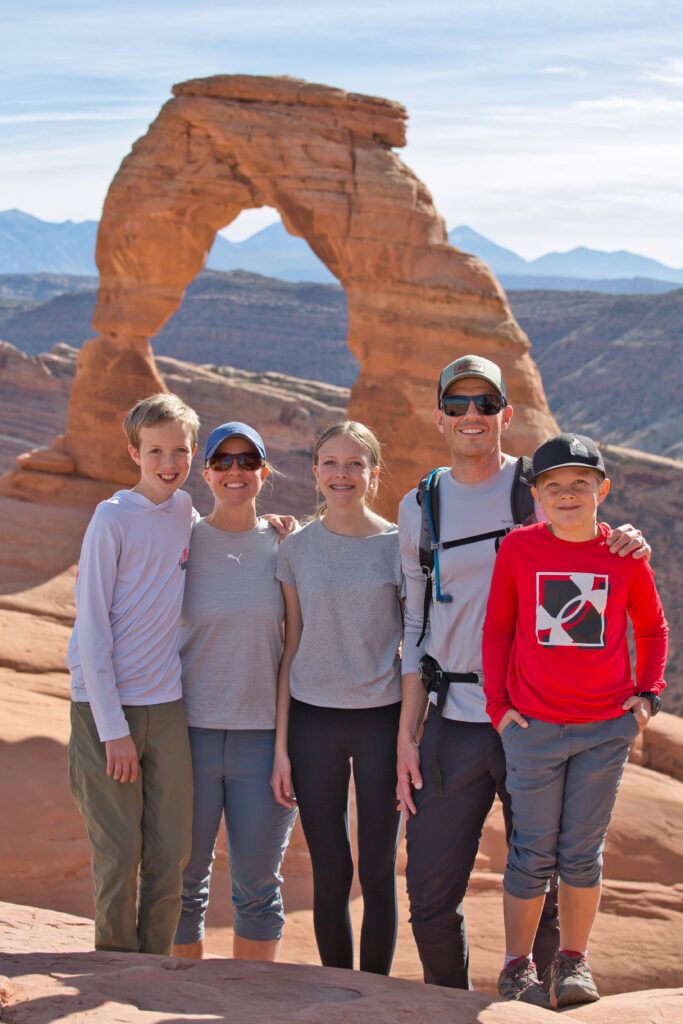
    A family group stands together beneath Delicate Arch in Utah’s red rock wilderness — a moment of shared adventure, connection, and intentional presence. This image reflects PathForgeXP’s mission to guide fathers and families toward meaningful experiences that build lasting bonds and personal legacy.

    I love this time of year – the lights, the comfort food, the focus on serving others, the gift giving, ski season. If we allow it, this time of year helps us reset, prioritize, and reflect on what truly matters. I read the following article last week just before my family and I went to the mall to experience holiday shopping.

    As we were walking around, looking at all the “stuff”, I couldn’t help but think about what Christmas would have been like 100 years ago. What were the top gifts that everyone had to have? What were the biggest designer trends? It was the height of the Roaring ‘20s, with the Great Depression still a few years away. World War I had recently ended.

    Now, think about life 100 years from now. What trends will define that era? Which gifts will capture attention? What political and economic landscapes will shape daily life? It’s anybody’s guess. My point is the gifts that feel so exciting now won’t matter in 6 months. In fact, the dopamine rush we get from unwrapping presents often fades the moment the last ribbon is pulled. We’ll then be left wondering why we focused so much on all this stuff.

    This year, let’s focus on giving our most valuable gift possible – the gift of time. Give your family a meaningful experience, something impactful throughout the year. Not just on Christmas Day. When I was a graduate student at BYU, I worked with Ramon Zabriskie (he’s an amazing fly fisherman, by the way). He and Bryan McCormick developed the Family Leisure Functioning Model.

    Their model suggests family leisure isn’t just about fun, it is foundational to strong relationships and healthy family functioning. They determined that families need both core and balance leisure activities. Core leisure activities are routine, low‑cost, and accessible (e.g., family meals, walks, board games). These activities provide stability and foster family cohesion. On the other hand, balance leisure activities are less frequent, novel, and often more complex (e.g., vacations, special outings) and provide variety to help families develop adaptability.

    As we step into this season, let’s give the gifts that matter most – shared meals, laughter on snowy trails, adventures that stretch us, and quiet rituals that anchor us. When we choose to give our time and presence, we invest in the kind of legacy that endures far beyond trends or toys. This Christmas, may we trade the fleeting thrill of “stuff” for experiences that strengthen our families. These deepen our connections and remind us what really matters.

  • Living with Intention: Building a Legacy Beyond Life’s Empty Calories

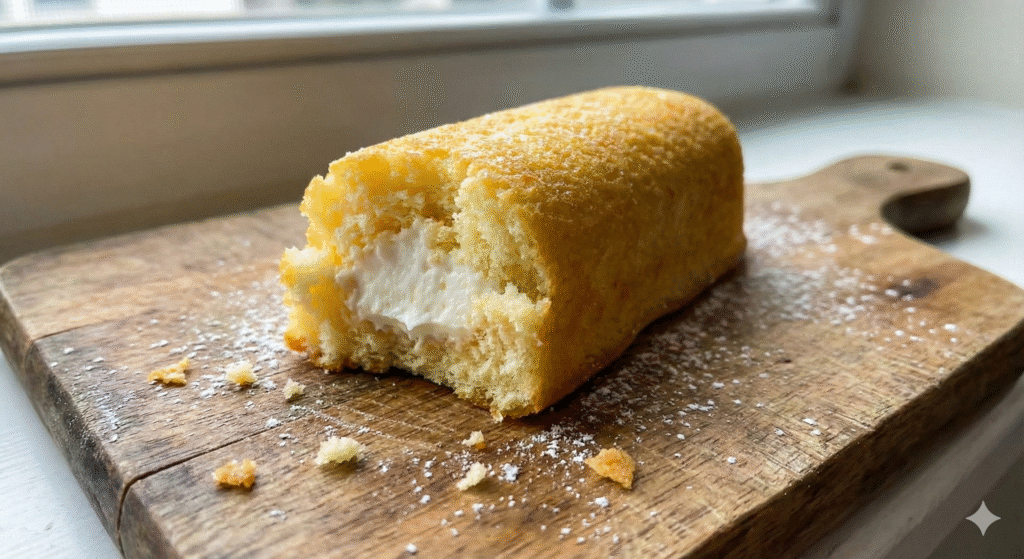
    A half-eaten Twinkie on a rustic wooden board, symbolizing the distractions men often consume. A visual metaphor for choosing purpose over passivity — aligned with PathForgeXP’s mission to guide fathers toward intentional living and lasting connection.

    The Twinkie Problem

    Remember Twinkies? Those cream filled vanilla cakes that seem to last forever? I used to say that Twinkies and cockroaches would be the only thing to last through a nuclear attack. Sure, they were a delicious snack for some of us and after eating a few of them may fill our belly. However, they are so heavily processed there’s very little nutritional value – basically, empty calories. If we were to only eat Twinkies for the next week, our bodies would be starved for critical nutrients. And if we ate them for a longer period, I’m sure we would transform into a well-preserved, atomic proof human – on second thought, maybe I should eat them more often.

    The Empty Calories of Modern Life

    All joking aside, how often are we as men filling our time with things that don’t matter? It is so easy to live day-to-day, self-medicating through our metaphorical Twinkies. These include the dead scroll on social media, binge-watching our favorite shows, working too much, and losing sight of what’s important. The challenges of life often drive us to look for quick and easy hits of dopamine. These help us feel better about our situation, when in reality, that’s the last thing we need.

    Choosing What Actually Nourishes You

    Instead, we should turn to bettering ourselves and building something that will last. What is the legacy you want to leave behind? Sure, it will take some effort, but anything worth doing in life will require some sacrifice on your end. You only have one life. This is your shot. How are you living? Are you just going through the motions, or are you living intentionally? Sure, it’s ok to relax and take a few minutes to watch your favorite show, or scroll through social media. But are you intentional about it?

    Your Time Won’t Last Forever

    Here’s the truth: Twinkies may last forever, but your time won’t. Each day is a chance to choose growth over distraction, connection over isolation, and purpose over passivity. The legacy you leave will be shaped not by the empty calories of convenience, but by the intentional steps you take toward meaning.

  • Leave Your Legacy

    Rediscover who you are and live with intention.

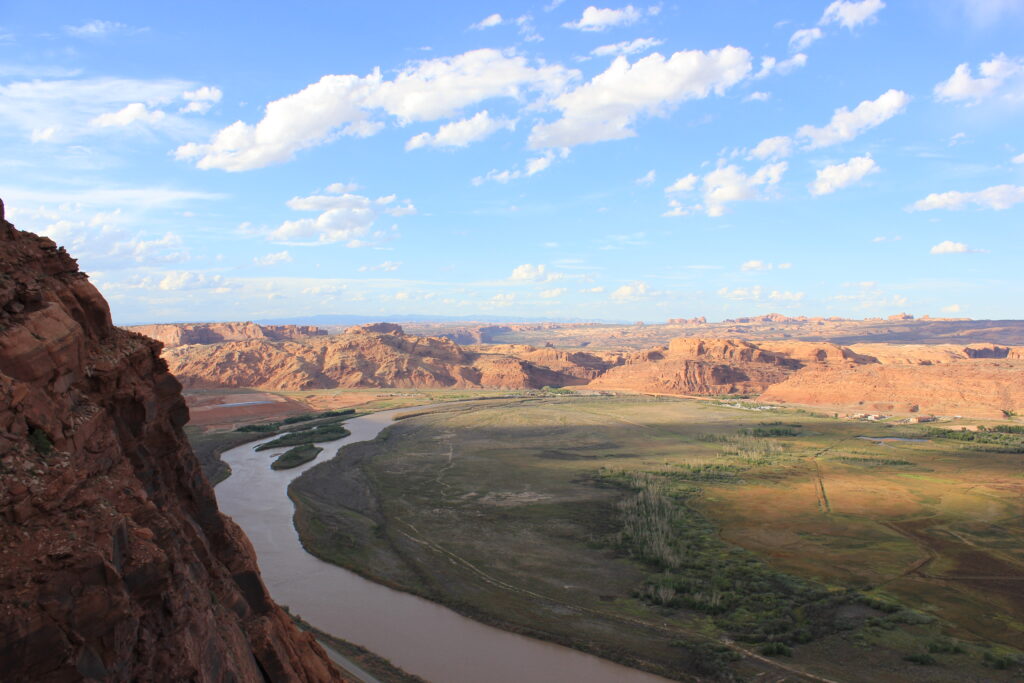
    Winding Colorado River beneath red rock cliffs near Moab, Utah — a rugged, expansive landscape symbolizing the journey of transformation. The terrain evokes the spirit of PathForgeXP: forging resilience, rediscovering purpose, and living with intention as fathers and leaders. Design your life with purpose.

    The Scars Left Behind

    On the northern bank of the Colorado River near my hometown of Moab, Utah, there used to be a massive tailings pile. In the 1950s, 60s, and 70s, long before tourism transformed the town, Moab was a mining community. Its main product – uranium. The mining company would extract the valuable mineral from the earth, then discard the remaining refuse into a growing mound. Over time, this became known simply as the tailings pile.

    What Extraction Leaves in Its Wake

    In recent years, the pile has been removed, but the land still bears the scars of extraction – a wide, open space where something precious was taken and the remnants left behind. To truly heal, we must live with intention, focusing on personal restoration.

    This Isn’t About Mining – It’s About Us

    This post isn’t about the virtues or vices of mining. It’s about us – about society, and the way life shapes us.

    The Gifts We’re Given – and the Ones We Bury

    When we’re born, we arrive with a unique set of gifts and talents. As we grow, experiences help us develop those gifts, but we also encounter voices telling us we’re not good enough, our talents are inconvenient, or that they don’t matter. Over time, we learn to sort our gifts into categories: the ones that are celebrated, and the ones that are dismissed.

    Realizing What’s Been Taken From Us

    In our 30s, 40s, or 50s, many of us begin to realize that some of our most valuable resources – our gifts, our passions, our talents – have been extracted. To counteract this, we must intentionally reclaim our strengths. The daily grind, the expectations of others, and the weight of responsibility slowly degrade us. What remains is a shell of what we once were, like a pile of used dirt. We look at ourselves and wonder: What happened to the person I used to be? Why am I not the husband, father, provider, or leader I thought I would become?

    The Cost of Living the Wrong Story

    The life we’ve been told to live often leaves us empty, desperate, anxious, and depressed.

    Scars Aren’t the End – They’re the Beginning

    But here’s the truth: the scars don’t have to be the end of the story.

    Reclaiming What’s Yours

    The land by the Colorado River will heal, and so can we. Our scars are not signs of defeat, but reminders that we are still here, still capable of growth, still able to leave a legacy. Imagine the impact if every father reclaimed his gifts, lived with intention, and passed that strength on to his children. The future is not written in the scars of extraction – it is written in the courage to rebuild. Let’s rise, together, and live the life we were designed to live.